How This Home Care Franchise Keeps Its Caregivers
Oct 27, 2026This is a transcript from Episode 61 of The Franchise Champion Show.
Listen to the full episode on Apple Podcasts, Spotify, or YouTube.
Alan Regala: My guests today decided, after a few hard turns, to stop building someone else's company and build something for their own family. Today, they own Seniors Helping Seniors in Utah, and they just picked up a Best of State award for it. Scott and Candi Mickiewicz, welcome to the show.
Scott Mickiewicz: Hey, Alan. Great to be here.
Candi Mickiewicz: Thanks for having us.
Alan Regala: I am very excited to have you both on my show today. This is a brand that I've known about and believe in, and I'm excited to share how this is different from other senior brands in the industry. But before we get started, I would love to hear from you guys what life looked like before franchising. Scott, let's start with you.
Scott Mickiewicz: Life before franchising was good. Not a lot of complaints in life. We were happy. We were doing well. I was in software sales up until I left, and I did well, right? Software was good. The industry was good. Prior to that, I was in law enforcement. So jumping from law enforcement, where you're just an abused child constantly, to software, where they take care of you, big difference. We made good money, I had good work-life balance, and things were pretty good. And then 2020 happened and COVID really changed the industry. A lot of those software companies that really preached that employees were the number one asset really showed that employees weren't their top priority. The profit margin was number one. So unfortunately, we got caught in a couple of COVID layoffs, and after bouncing around for a couple of years and just being frustrated with it, I thought, there's gotta be something out there that I can just build on my own and see where it goes. I wanted to bet on myself a little bit and just take the chance. It was a big chance and it was a big step forward, but I'm glad we did it.
Alan Regala: I love it. That's great. Candi, I'd love to hear from you.
Candi Mickiewicz: So I had been out of the workforce for quite a bit. I did a little bit on the side, but we have four kids, and I hadn't really been full-time in the workforce since, gosh, since our 15-year-old was born. So 13 years that I'd really just been doing mainly the mom thing. I did a few things on the side as well. But our youngest was about to start kindergarten, and I knew that it was time to get back out there. I was thinking something more along the lines of crossing guard or something to just dip my toe back in the workforce. But when Scott approached me about Seniors Helping Seniors, or at least asked me to sit in on a meeting with him, I was sold immediately. The feeling that I got talking to the representative about it and just hearing what it was all about, I immediately felt great about it.
Alan Regala: That's so cool. Okay, so Scott, you mentioned you wanted to do something for yourself. You wanted to bet on yourself, which a lot of people can relate to. I certainly can. How did you end up with this particular business?
Scott Mickiewicz: Well, like a lot of people out there, I was on LinkedIn a lot trying to make connections, mostly through sales, but I would get a lot of recruiters messaging me. "Hey, Scott, have you ever thought about owning a franchise? Have you ever looked into this?" And at one point, I just started saying yes to all of those people, right? And I would start having meetings. They would represent whatever brand or brands they represented. I met with probably, I don't know, 15, 20 different recruiters, and nothing really spoke to me, nothing big enough to take such a chance on, until one guy said, "Seniors Helping Seniors." And I said, "Wow, that sounds interesting. Tell me about it." I guess it really hit me based on the fact that I wouldn't have to recruit younger employees. I could go after employees that were retired or semi-retired and have the opportunity to serve on both ends of the spectrum. So that really appealed to me. I met with a couple of people there, and I was like, "Wow, this is fantastic. I think it's exactly what we're looking for." And then obviously I had to get Candi on board, and it didn't take a whole lot of convincing.
Alan Regala: It did not take a lot of convincing, is what it sounds like. Okay, so for people who don't know what this brand does, Seniors Helping Seniors, what's the 30-second elevator pitch on what you do and how you impact the lives of your clients?
Candi Mickiewicz: So we are a non-medical in-home care agency that hires caregivers to go into the homes of seniors and help them with whatever it is that they need. Whether it's something as simple as providing companionship or taking them to doctor's appointments, things like that, helping out with light housework, meal prep, to more advanced skills, things that are a little more on the CNA end of the spectrum, where we can help out with showering and other types of personal care. And there are a lot of really great agencies out there who provide this type of care. It's a really growing need in our world. We have a lot of seniors who really want to age in place. They want to stay at home for as long as possible. Lots of great agencies. Ours is the only agency that specifically focuses on mature caregivers. So we're Seniors Helping Seniors. Well, we like to say that we're mature, able-bodied adults helping seniors.
Scott Mickiewicz: Doesn't have quite the same ring to it.
Candi Mickiewicz: No. So our caregivers are people who have a bit more life experience, who can relate more easily to a senior, who have taken care of their own homes, who have run their own households. Some of them have a lot of professional experience as caregivers. Some of them just have the passion for it and the desire to serve and to learn how to do that. But they all come with a background, people who have had lots of life experiences and can just jump right in and make deeper connections.
Alan Regala: Yeah, that's great. I would love to hear from you, Candi, on what impact having seniors help other seniors has versus just anyone, or someone younger, for example. What are the benefits, both to you as a franchise owner and, more importantly, to your clients?
Candi Mickiewicz: That's a great question. I was a CNA in my 20s, so I have seen both ends of it. I worked with seniors when I was in college. I worked at an assisted living home, working mainly with people who had Alzheimer's and dementia, and I absolutely loved my time as a CNA. I did it for about four years. I've got lots of really great, hysterical stories. I grew to love lots of wonderful people. But it's a little different having a caregiver in your home, and a lot of seniors are hesitant to take that step. That generation is very independent. They're very self-reliant. They have a hard time wanting to accept help from other people. They're reluctant to have a stranger come in. Even a 40-year-old, right? A 40-year-old is still a far ways away from turning 90. But having a couple more decades under your belt just helps you to relate a lot easier and to establish a much quicker connection with a senior. And also, like I mentioned, they've already cared for their own households, and so, again, no shade to 20-year-olds, because I was a 20-year-old CNA, but they're better at seeing the needs and filling them without being asked. They see a pile of laundry, and they're gonna fold that pile of laundry. Same with the sink full of dishes. Not to say that a 20-year-old couldn't do that, but they're just better at more naturally seeing those needs and jumping right in and fulfilling them.
Alan Regala: It makes a ton of sense. I have aging parents as well, and my dad is getting some in-home care right now. There's a couple of different caregivers that he has, and one of them is a little bit older and definitely relates a lot easier. The connection is just so much easier, and in more cases it's more natural for them to figure it out, without having to be told what to do. It just seems more natural.
Candi Mickiewicz: That's exactly right. And the benefit to us as owners is that we really don't have to work very hard to get clients. People really resonate with the idea of having a mature caregiver in their home. It doesn't take a whole lot to sell them, which really makes it great for us, because that's not what we wanna do. We go into homes and we meet with these seniors, and we stay way too long because we get to talking with them, and it's just awesome. We connect easily because they can see the immediate value in having a mature caregiver in their home, and so that makes our jobs a lot easier. And it's great because we get to meet a lot of really cool people who come with their own set of resources as well. We've got people who owned house cleaning businesses, or who have connections with community service organizations near our clients, some of whom need a little bit of extra help. Stuff that we've just picked up along the way that we wouldn't get with someone who was younger, people who come with professional backgrounds that they can then bring into their clients' homes. It's really cool.
Alan Regala: I can imagine it being the perfect situation, where you've got someone who is older, who's experienced taking care of families, who's had their professional life already and doesn't need the money, and they're doing this more to have purpose, to help others, to serve. I could see that being what you might want as an owner, for everyone to fall into that category. I'm curious to know, in reality, how often that happens with the caregivers that you have, and if there are other types of backgrounds and situations as well. And the reason I ask is, what I hear most in this industry is the difficulty of finding and retaining caregivers as probably the number one challenge, so I'm curious how that plays into this.
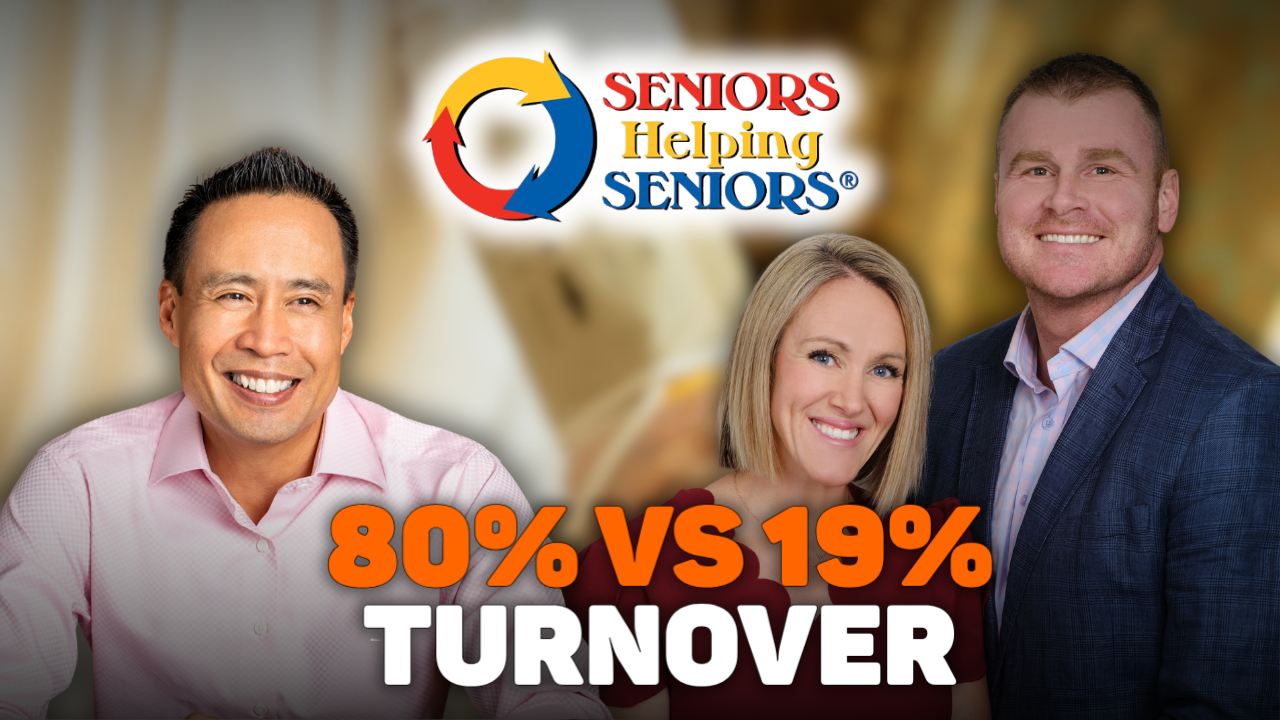
Scott Mickiewicz: Yeah, that's what I was gonna touch on. A huge benefit to us as owners, but also to our clients, is that we have such a low turnover rate. We help a lot of veterans. I had a conversation with one of the VA caseworkers out here, I mean, it was like last week, and she said, "Scott, how do you guys..." We never say no. The VA calls and says, "We have this veteran," and I say yes, right? "How do you guys always have caregivers when it seems like everybody else is really struggling?" And I said, "It's because..." I mean, we're always hiring, but we don't really lose a lot of caregivers. Across the nation, the annual turnover rate for caregivers is around 80 percent. Being a caregiver is a difficult job. It's not easy. It's stressful. It can be dirty and gross at times, right? You have to be the right type of person to want to be a caregiver, but somebody who wants to be a caregiver in their fifties or sixties is doing it for a much different reason. So like I said, nationwide it's about 80 percent. Last year, our turnover rate was 19 percent. When we place a caregiver with a client, that turnover rate is almost zero. Most of the caregivers that we lose, it's because we'll hire people from all over, but we might not get a client in that area, or it might not fit their availability, and things like that, so they might leave us before they actually get a client, which is always sad. We're disappointed when that happens. But when we place a caregiver with a client, the turnover rate is almost nothing. So for us, it's easy, because we don't have to worry about a big turnover rate. But for the client, it's amazing, because they get the same caregiver day in and day out, and they're able to build a really great bond and get more than just personal care. They can build a friendship, and it's meaningful on both ends.
Alan Regala: Yeah, that's amazing. What you said just now is amazing on its own, how valuable that is for clients as well as the caregivers, enriching their lives and providing the purpose they're looking for at that stage in their life. But that consistency... My mom just told me last week that one of the caregivers she had for my dad ended up not being able to continue on, for whatever reason. And this was after at least a month, maybe two months, of consistent care, when she was like, "Oh, yes, we finally got the rhythm down. We've got a couple of caregivers, this one provides this service, this one does this thing better, and it's great." And then you lose half of that, and it's like, "Ugh, now we gotta start over." And for her, a big thing is she needs to build that level of comfort with the caregiver before she feels comfortable leaving or doing something else. So there's that, "Ugh, we gotta start over. Now I have to change my whole schedule around again to bring someone new in." And then of course the thought is, "Well, what if this one doesn't last?" So it seems like there's a big peace-of-mind aspect that you're helping with as well.
Scott Mickiewicz: Absolutely. We don't go after any other agency's clients, right? That's not at all in our advertising or anything like that. But we get calls all the time, weekly: "Hey, we're just exploring this because we're with this company, and it's great when we have a great caregiver, but there's just constant turnover," or "the no-show rate is really high." Our no-show rate is basically nothing, because if somebody calls, even first thing in the morning, and says, "Hey, I'm so sorry, I'm sick, I've been throwing up all night," we can message ten caregivers and ask them if they can cover this shift, and we will have six of them say yes, right? Because they're in it for a different reason. They don't want somebody to go without care, and those are the type of caregivers that we're looking for.
Alan Regala: That's amazing. Candi, did you have something you wanted to add to that?
Candi Mickiewicz: No, I'm just agreeing with it all. And I did have one thought as you were talking. For me, the most rewarding part of this goes along with what you were saying. Sometimes we'll get a Google review where the family talks about that peace of mind, the ability to step away and know that their loved one is being taken care of by somebody that they trust. That is, for me, one of the biggest benefits. The greatest blessing that we get from being a part of this business is knowing that we are serving the clients, we're serving their family, we're serving the caregivers. It's mutually beneficial to all of us, because we all have the privilege of being able to create these relationships, these bonds, and serve others in the process. It's awesome.
Alan Regala: That's so cool. I can tell you guys are super passionate about what you do, and in this business I can see it being easy to have that passion. Can you guys tell me a little bit about what business was like? What was life like in the first year? You're starting something brand new, you're jumping in, you're now working for yourselves. What was that like? And I'd also love to hear how you guys decided who's doing what in the business.
Scott Mickiewicz: Well, I can describe the first year in one word, and it's stressful. Right? It was very stressful. Candi and I both jumped in with both feet. So it would've been, what, March 2024, right? I left software, and we were 100% in. We had to really figure everything out. Neither of us had ever done anything like this. I did high-level software sales, so I understand systems and things like that, but I'd never had to deal with state compliance or payroll or billing or any of the ins and outs. But we started at zero, so it gave us an opportunity to slowly ramp up. Now mind you, when you're slowly ramping up, it means you're not making any money, and that's, again, stressful. But in our first month, I think we signed five or six clients, and it gave us an opportunity to make small mistakes as we figured out how to do it right. And I've said this from the very beginning: we are gonna make mistakes because we're humans, right? Our caregivers are going to make mistakes because they're humans. But we're providing a service, so there's a lot of grace that's associated with that. So as we make mistakes, we take ownership, right? "I am so sorry. That is totally my fault. Let me fix it." We tell all of our clients, "If we make a mistake, you have to let us know, because we can't fix something we don't know we've done." So in that first year, while we were successful and grew pretty steadily, we made a lot of mistakes, and we had to just figure out how to be owners. And to answer your second question, how did we figure out who did what? We both did everything, until I figured out that I hated doing this and Candi liked it, and Candi hated doing this and I didn't mind it. We probably both did everything for three or four months, and then it just naturally morphed into our roles. We're both owners. I focus on one part and Candi focuses a little bit more on the other. But at the same time, we still both do everything when we need to.
Alan Regala: Interesting. It makes a lot of sense, what you said. Stressful is a good definition for that first year. And as far as the roles go, I would love to hear from you, Candi. You guys can do a bit of everything, but what do you tend to focus on yourself, and what does Scott do?
Candi Mickiewicz: Scott's a numbers person, and he's very business-minded, where all of that is very Greek to me. My brain just does not make sense of any of that. So that's really helpful, because he's also very goal-driven, and he's able to plan out how all of that goes, how we're gonna be successful looking forward, right? And I'm more of a details person. Like marketing, I was an art major for a really long time, so I really enjoy that aspect of it, and the day-to-day problem-solving. I spend a lot of time functioning sort of in an HR role, where when caregivers have concerns, I take that on. I plan all of our company events. I'm just in the details of a lot of different background things, where Scott handles business-minded sort of decisions. I like to say I'm the people person, and he's the numbers person.
Alan Regala: All right, that's fair. So maybe you could tell me a little bit about what the organization looks like today as far as your team goes. In particular, I'm interested in who's handling the sales aspect of things, who's actually getting more clients, and then who's in charge of hiring and retention and training and such.
Scott Mickiewicz: It's all of us again, but our team has grown, right? We are in our third year. We got really lucky in our first year and hired a lady named Amy. We actually hired her as a caregiver. I interviewed her, and I remember thinking, "Wow, I bet she would make a really good admin when we get to that point." We got to that point maybe a month later, and I reached out to Amy and said, "Hey, are you interested in a part-time admin role?" And she's like, "I don't know, maybe..." And I talked her into it, and boy, oh boy, an absolute godsend. Amy has now been with us almost the entire time we've been in business, and she is literally our right hand. So when it comes down to business decisions, it's me and Candi and Amy. Amy is our general manager, basically. She runs a lot of the day in and day out and helps with training and things like that. We've taken a little bit different approach to how we run our agency, because we really take a lot of time in who we place with what clients, right? We really wanna make that match. We describe it as the difference between providing care and providing quality care. We wanna provide a high quality of care. If we just provided care, it would be really easy, right? Candi and I could do it with Amy and maybe one other person. But we don't do that. So we have five other people who work for us full-time. They're admins. We call them care coordinators. We take our area and split it up into smaller groups, and each care coordinator basically owns their own territory, so that they can not only get to know their clients, but also get to know their caregivers. That way they can really understand what care each client needs and what each caregiver offers, so that we can provide a higher quality of care. So between providing care and running the agency, it's all of us. The sales aspect comes down to a few of us. Candi and I still do home visits, though Candi does more than me at this point, and we'll go with one of those care coordinators, because we want that person to meet the client and understand those needs. And then when it comes to hiring, we have a hiring manager who, again, was an amazing caregiver for us for about a year. Then her client passed away, and we brought her on in an admin role, and she's been absolutely amazing. And then retention is just all of us. We all deal with retention every day, just making sure that the caregivers feel heard and understood. Again, being a caregiver is a hard, demanding job, and sometimes they just need to be heard and listened to, and we all try to do that really well. Candi does that a lot better than me.
Alan Regala: I'm seeing this whole other benefit, which wasn't stated outright earlier, and it probably should be for this brand. It's being able to bring on people at that age, like we mentioned, who are already done with their careers but have all this experience built up and can be good at so many things, and they just wanna provide service and have purpose. And you being able to say, "Well, would you like to help us out with this other thing, like admin, or helping us hire other people, or being a manager?" Just getting some great talent from that perspective. I think that's a huge benefit.
Candi Mickiewicz: We also have what we call our support staff. They're caregivers who also help us out with smaller things. We have a caregiver who also functions as our director of veteran outreach. Scott has been in the Army for 21 years, so as a military family, taking care of our veterans is really important to us. This one particular caregiver will go into the homes of veterans and help them figure out and go through the process of getting eligible for different kinds of veteran benefits. Sometimes that's us and sometimes that's other types of things, but she helps us out with that part. We have another caregiver who helps me with birthday cards, another one who helps out with training. We look to capitalize on the different strengths of our caregivers, to help them get a little bit more out of it as well, and to acknowledge, "We see your strengths, and we want to put those to good use." They help us out, but they also get the pride of knowing that they're helping in these other areas. So that's fun as well. They're like small promotions that we're able to reward our caregivers with.
Alan Regala: That is so cool. Awesome. Awesome.
Quick pause. Wouldn't it be great to own a business that gives you real purpose and makes you great money? I'd love to help you find that right franchise. I'm a former franchise owner myself, 14 years with a multimillion-dollar exit. In that process, I learn about you first: your goals, your skills, your investment level. Then I match you with a handful of opportunities from over 600 brands. I support you all the way through the process, and you get to decide if franchising is your path forward or not. My service is completely free. I'm only paid by franchisors after you find the right fit and if you move forward. Book an intro call with me. Just go to athletetoowner.com/fit. Now, back to Scott and Candi.
Okay, I'd love to go down this little branch over here, where you just mentioned that Scott is in the military. Scott, thank you for your service. Can you tell us a bit about your background there and maybe how that's played into helping you in this business?
Scott Mickiewicz: I've been in the Army for 21 years. I'm currently an E-8. We talked about this before we started, that I'm juggling a lot. I'm actually in the Sergeant Major Academy right now, which is basically a master's-level course for the promotion to E-9. So that's also really demanding, and it's great that I have an amazing team, because sometimes I just have to work on that and focus on it as well. But I've done a lot in the military. I've really been in leadership positions. Out of those 21 years, I've been in a leadership position for probably 18 of them. So I pride myself a lot on direct leadership and being able to help people understand how to lead, right? Especially now, as our team is growing, and some of our people have never been in direct leadership positions, and now they have 20, 30, 40 caregivers reporting to them, right? That's really hard. It's hard understanding different personalities and understanding that one person might need to be led a different way than another person. So that's definitely given me a lot of confidence to step into this role and be the owner over so many people, right? We have, I don't know, three hundred and something caregivers at this point. So we're relatively big. But we still have to lead our admin staff so that our vision is still brought forth in the community, even though we can't directly make those decisions now, because we're just too busy. We need to be able to train our people to fulfill our vision and provide that high quality of care. And as long as we're doing that, we're going to grow, right? So it's all about that. But I've absolutely loved my time in the military, and I wouldn't be able to do what we're doing now if it wasn't for that, for sure.
Alan Regala: That's awesome. It sounds like so much of the time you spent there was in leadership, which is obviously directly applicable to what you're doing now, leading those admins who are leading the regions that you have. By the way, you said that this is a little bit different, so I'm curious to know what you meant. Is that model something that you created, that's not how other people do it within Seniors Helping Seniors? Or is it something you do as a brand that other brands just don't do?
Scott Mickiewicz: So, yes and no. There are definitely other Seniors Helping Seniors agencies that are just as focused on high-quality care. Now, that's an advantage that we have as Seniors Helping Seniors. I know there are amazing owners that I talk to all the time who don't take nearly the amount of time that we take in ensuring it's the caregiver that we feel is the right caregiver. But when you hire great people, it's easier to do. I talked with one of our awesome owners in Florida, and he basically gave me the 80/20 rule, right? Eighty percent of the time, because he hires great people, he can put anybody over there, and they're going to be a better fit than caregivers from other agencies. And so he banks on that, and he's done it for a long time, and he's great. I think he's top 10 in the nation for franchises. But we just make that promise when we meet people, that we're gonna be very deliberate about who we're placing with your mom or dad, or with you, so that they feel better about it and they're more open to having somebody in their home. It's all about making them feel comfortable so that they can accept care that will keep them in their home longer.
Candi Mickiewicz: And I think a lot of that comes down to knowing the community that you live in as well, because as we've talked to other owners, some things that make sense to us don't make sense in their area. One thing that we really like about Seniors Helping Seniors as a franchise is that they provide the scaffolding and a lot of really great, amazing tools, but they also give us the freedom to figure out how to implement those tools within our community in a way that's gonna work best for us. They give us the path, and then they get out of our way. I don't mean that they were in our way to begin with, but they trust us to make the best choices for our community. They provide coaching all along the way, and advice, and all of those things that have been so helpful to us. But I think they recognize that each area is different and has its own needs. In our community specifically, this works best for us. We've said that even as we grow and become a large agency, we want it to always feel like a small agency, and so that's why we break up into those smaller areas. But that model just doesn't work in some other communities, because their demographic is completely different. So I think that's what Scott meant by yes and no. Yes, we work differently than a lot of other agencies, but also each franchise owner approaches things a little bit differently, according to the needs of their community. But one thing that I've found to be pretty steady across the board, as we've met other owners... Last year we actually got to meet a lot of them in person at a convention in Nashville, and one thing that I felt was a common thread among all of us is that we all have the same why. And the why goes along with our favorite tagline. You can actually see it up above me. There are a few different taglines that we can use, and this one's my favorite: "It's a way to give and receive." And I think that why is a common thread among all of the franchise owners. Even though we may approach it differently, it all comes down to people feeling this pull to be able to give and receive.
Alan Regala: I love it. That is a great tagline. There are two sides to what you mentioned. This didn't come from the franchisor, right? It's the way that you're doing it, is what it sounds like to me. So two things I have to comment on. One is that it's great that they're obviously allowing you that flexibility, that freedom to figure out what needs to be done in your market. And on the other side, kudos to you guys for figuring out what you needed to figure out and making it work when there isn't a framework in place that you have to follow, right? I think this is true for most franchise brands out there. They have systems and processes in place for you to follow so you can be successful, but there's always room for improvement in some manner. And in certain cases like this, you're doing what they tell you to do, you're following the systems, following the processes, but then you realize there's a gap, right? There are always gaps. But to be able to recognize that and then create this additional layer for yourself, because it's what makes sense in your market, that's gonna help you guys be successful. And obviously, it's not doing anything that's in conflict with the brand. It's actually making it better, and it's something that you can prove out in your own market. And I think this is how franchises get better over time, with other franchise owners in the same organization being able to learn and say, "Oh, that was working well for you. Let me try that here." It may not work for everybody, but I'm sure it's gonna be helpful for a lot of other owners.
Scott Mickiewicz: And it's really something that I've loved about the leadership here at Seniors Helping Seniors. We love the presidents of the company. They're a husband and wife as well. They actually live up in Park City now. They relocated to be closer to us, I'm pretty sure. But they're amazing. They're always available to answer questions or give advice, and when they see that somebody else is doing something different that works, they're not so prideful as to say, "That's not how it should be done, because that's how we've always done it," right? When something's working, they want others to hear about it and share about it. And as owners across the nation, we talk often and we share ideas, what's working for you, and hopefully that will work for me. I've taken ideas even just this year. We've started implementing things that we've learned from other owners to make things easier and run better. They just want us to be successful. They are our biggest cheerleaders, and we love it. It is an absolute family feel here.
Alan Regala: I love it. All right, I'm gonna pivot a little bit here. You mentioned making some mistakes in that first year and learning, which is totally normal and natural. But what would you say was the biggest setback, the biggest hurdle you had in that first year, or at any time, that was maybe a defining moment in how you ended up changing how you went about running the business?
Scott Mickiewicz: Yeah, one thing that I can think of... As Candi said, I'm running more of the back end and the numbers, and I'm looking at the projections, right? In our first year, we were the first owners here in Utah, and I didn't know what we were gonna do in the first year. But we had to come up with a business plan and set a goal, and I just threw out a number. I said, "Let's try to do $250,000 in revenue," right? In our first year. It's not our first 12 months, but from March to December. And as we figured it out, as we signed clients, as we started with some admin staff and things like that, I kept the numbers, and it was scary. I saw our savings go down as our revenue started going up, but it wasn't matching. I keep a budgeting spreadsheet that helps me project into the next months and the next year, and it goes out five years for goals. Going into our second year, so it would've been January 2025, we were doing well. We had grown quite a bit, and I looked at our revenue. A weakness that I had, and a mistake that I made, was not really understanding the revenue flow as you'd see it, with receivables coming in and payroll going out, and cash flow. I would definitely advise people to do a cash flow crash course, better than I did. But I looked at it and I said, "You know what? We're doing okay. We should hire another admin." And so we did that. We hired an admin before we needed another admin, because we knew we were growing. So we hired this other person, and thank goodness we did, because we just grew and grew and grew, and without that person it would've been a huge mistake. Now, the mistake that I made was that my form wasn't set up correctly to account for our admins' salaries. And it was a huge mistake. It really could have cost us. But had I not made that mistake, we wouldn't have hired this other person. We would have held back a couple of months, and that would have really caused serious problems. This was in January. It would have caused serious problems come March, April, because we would not have been prepared. We probably would have overworked Amy, and she would have quit, and we wouldn't be where we are now. So a small mistake led to this enormous growth, because we took a step forward when we needed to, but I don't think I would have been brave enough to had I not made that mistake. So it was definitely a blessing in disguise that helped us a ton. But it's little things like that. You don't know what you don't know until you know it.
Alan Regala: That's a really interesting example and a great lesson about cash flow and growth. Profit on a spreadsheet is different than cash in the bank, and a lot of people don't understand that when you're growing, and especially when you have to hire people like this, you pay out of pocket before the revenue comes in, so the bank account is going down even though it feels like things should be going up. So that's a great lesson, and what a fortuitous mistake in your spreadsheet. And I would counter and say that the mistake didn't lead to the growth, because it sounded like you were already on that trajectory. But maybe the mistake led to you not feeling the pain of being understaffed and overwhelmed, burning people out, losing people, and all that other stuff. You were able to staff accordingly to prepare for the growth instead of being overwhelmed by it.
Scott Mickiewicz: Absolutely. We went from a three-legged table to a four-legged table, and because we had that other leg, the table didn't fall over.
Alan Regala: Right. Exactly. Wow, that's a great story. I love to hear about a mistake like that. The learning that comes out of it is great, but it also leads to good things and better things, not something drastic.
Scott Mickiewicz: What's funny is I didn't even realize that I made that mistake until, I don't know, six months ago. I finally found it, and I was like, "Oh my gosh." But no, it ended up being great.
Alan Regala: That's awesome. Okay, now I wanna counter that with the success that you guys have had. Would you mind sharing some numbers with us? Because I know you've won some awards, and you've done an amazing job in the first year and since. Do you guys mind sharing some of that with us?
Scott Mickiewicz: Yeah, not at all. So like I said, we made that goal of $250,000 in our first year of 20... 2012, 2020...
Candi Mickiewicz: 2024.
Alan Regala: 2024?
Scott Mickiewicz: Sorry. There were two twelves in there, so it made sense. And we fell short of that. We ended up doing $237,000 or something like that. So, I mean, a great first year. We were really happy with that. And then I looked at our numbers, and I made a really hard stretch goal of doing a million dollars in 2025. It started off a little rocky. At midyear, we were trending about $150,000 down on that goal, which would still have been a great accomplishment. But we ended up having an amazing second half, from August on, and just grew and grew and grew, and ended up doing $1.1 million last year. Again, this year, we set another stretch goal of $3 million, and as of right now, we're trending about $100,000 over that, so we should easily hit that. Like you stated, we did get Best of State for senior care services in Utah this year. We finished in the top 30 for franchises across the United States last year. Our goal is to crack the top 10 this year. I think it's gonna be really close, but we've got some big competition out there, for sure. But more than anything else... Looking at those numbers is great. We'd love to be able to put some savings away for our kids and put the kids through college and things like that. But the number one goal that we look at is the amount of hours that we provide. That's the number that we look at weekly and monthly. It's not the revenue numbers. It's the hours of care that we provide in our community.
Alan Regala: That's amazing. Well, congratulations to both of you on such great success, and of course it's all your hard work and the smart decisions that you've made, and maybe one small mistake. Candi, I would love to hear from you about what life is like now, having gone from being at home and considering maybe being a crossing guard as an option, to instead owning and running a business. Now that you're a couple of years into it, what does life look like on a daily basis for you?
Candi Mickiewicz: Well, fortunately, we have an amazing team. We want us and all of our employees, admin, caregivers, everyone, to be able to put their families first and have that be their number one priority. And luckily, we have great people in place to work together as a team to make that a reality. Everybody's schedule is flexible, but I think mine is a lot more up and down than anybody else's, depending on the day of the week and things going on. I wake up early to start working before my kids wake up, and then they get up. We have two big kids and two little kids. I help my little kids get out the door. I also do a little bit of yelling to the big kids. And then every day looks very different for me, because I'm not over an area like our care coordinators are, so there are different focuses each day. Whatever is on fire, I'm gonna tackle that first. Or whatever big project, whether it's helping to get things ready for the newsletter, or putting together a training packet, all of those things. I'd say that my time at this point is more project-oriented than day-to-day tasks, although there are those as well. But because we have this phenomenal team, sometimes I jump into some of their roles, and sometimes they help pick up the slack if a client has called me and I have to refer it to one of them because I'm rushing out to do a field trip, or things like that. What's really great is that we put a big emphasis on everybody having the level of training to be able to help each other out. We have a care coordinator right now who is on vacation in the Bahamas, and we want our staff to be able to go on vacation and turn their phones off and not hear from us. Our hiring manager just got back from a two-week trip to Hawaii. Two weeks is a long time to be without a hiring manager, and she offered to jump on from time to time, and we said, "Absolutely not. We don't wanna talk to you for those two weeks. Go away." So they're able to provide that for me as well. When I really need to focus on being a mom, I can, and I don't have to worry about things falling through the cracks, because they're all there in the background, stepping in wherever anybody needs some help. I don't know if that was a great answer to your question, because I don't have a set schedule each day. I'm kind of all over the place, but we have the support in place to make it possible for me to be all over the place.
Alan Regala: That's great. You summed it up: it's all about the team, right? Having a great team in place that allows you to operate in the areas that you want to operate in, take time off when you need to, take care of the kids, and all that sort of stuff. It's all about the team. You have four kids, the two younger and two older. I'm curious how you guys integrate the business into home life. To me, I think it's a great opportunity to demonstrate to your kids what the real world is like, and also some of the values that you have around hard work and leading people and accountability and all these other things. I'm curious how you integrate this into home life, and whether the kids help out at all in any of the functions or anything like that.
Scott Mickiewicz: If the IRS is listening, they do help a lot in the company. Yeah, absolutely. It's hard. It's been a hard adjustment, and even after three years it's still hard, because sometimes there are busy days and Candi and I are working, and then we look up and it's 6:15 and we have no idea what's for dinner, right? In the last year, we've eaten a lot more pizza and ordered in a lot more than we ever have. It's definitely hard to juggle the home responsibilities and the work responsibilities. Client needs come up at any point in the day, or in the evening at times. Again, having a great team divvies up that work, and it makes it better. But I do hope that we're showing our kids what hard work looks like, because this journey didn't start two and a half, three years ago when we signed our franchise agreement, right? It started when Candi graduated from college at BYU and I graduated from Utah Valley. It started when I took a different job that stretched my abilities. It started when I took a promotion with the Army, right? I tell my kids all the time, and with high school kids, right, sometimes they wanna do the very minimum. What is good enough? Is a B good enough? Most of the time, yeah. If that is truly your level, and you cannot grasp the concepts, and you're giving it your hardest, then yes, a B is good enough. But if it comes down to effort, and putting in a little bit more effort gets you an A, then do that, because you don't wanna close a door at 15 or 16 or 17 that's going to cost you the ability to do something later when you're 20 or 25, right? That's something I've prided myself on, whether it's in the military or beyond. I've been deployed. I've been to Afghanistan. I've been all over the world. But the fact of the matter is, I don't wanna close a door now, even at 43 years old. I'm not gonna close a door now that's gonna cost me an opportunity when I'm 50. And so hopefully teaching them that now gives them the opportunity to do more with their life later on, by making the hard decisions now and working harder now, so that they can have more in their future.
Alan Regala: I love that. Anything you wanna add to that?
Candi Mickiewicz: Scott said it started when we graduated and when we went after this promotion or whatever. As far as how it integrates with our kids, I also think that it started from childhood, when our parents taught us the value of serving others and being responsible, those types of things that aren't necessarily things you think about when it comes to being successful in a business. But we harp all the time on teamwork within our family. Mom and Dad are busier now, so we need your help cleaning up the house. We need your help chopping vegetables for dinner. Things like that, family values that we hope will make them more successful in life in general. We get unique opportunities to teach those lessons because we are business owners. They might not think, "Oh, this is gonna make me a successful professional," but it will, because they're learning to work together, to have patience with one another, to do all of these things that can be difficult when your parents are, I don't wanna say always tied to our phones, but kind of. We are caring for humans, and so somebody has to be available, right, to be able to provide care for them. And sometimes our kids have to take, I don't wanna say a backseat, but in that moment, yes, while we deal with this one thing, it can be hard. But we hope that they can see the why behind it as well. They can see that we're serving people, that we're doing things to help better our community, that we're working hard, that we're giving it our best, like Scott said. Little things that might not necessarily jump out as business practices. I make them help me put together little packages, little things like that.
Alan Regala: I think that's great. I think the more you can show them what the real world looks like and what hard work looks like, the better. Sometimes you have to help out around the house or help out with the business, and sometimes we have priorities, things that come up that we have to take care of. I think those are all great life lessons. And what Scott said about maximizing the opportunities that you can have for the future: don't limit yourself now, and keep those doors open. All right, last thing for you guys. I'd love to hear, just real quick, one bit of advice you'd have for someone who is thinking about leaving the corporate world, or maybe they're already gone, or they're just working for someone else and they're thinking about betting on themselves and starting a franchise business. What would you recommend?
Scott Mickiewicz: My number one recommendation would be to secure any loans or credit that you need prior to leaving your W-2 employment. Because once you work for yourself, until you're making a pretty decent amount, you're a criminal in the eyes of all banking institutions. In that first year, had I had even a $20,000 line of credit for the business, boy, it would have taken a lot of pressure off from time to time. And I struggled. Nobody would give me the time of day. Even though we were growing and we showed this growth, we were just an absolute criminal in the eyes of any banking institution. Now that we are very positive in revenue, everybody wants to give me money, and I don't need it anymore. So yeah, that would honestly be my number one piece of advice. If you're going to do it, secure lines of credit, even a HELOC. We own our home. We own rental properties. In that two-year period, I couldn't even get money out of my own properties because of the self-employment. So yeah, secure lines of credit before leaving W-2 employment, for sure.
Alan Regala: Great advice. Candi?
Candi Mickiewicz: Well, I had two things come to mind, and the first is to go all in. Jump in. If you hold back, your business will probably still grow, but it'll be slower, and you're not gonna be as successful as quickly as you could. It's scarier, for sure. But go all in from the beginning so that you can grow quicker, and in the end it'll make you more successful. And the other thing I thought of was, when you're not good at something, hire somebody who is better than you. Whether that's hiring them to join your team because they have qualities that you aren't as great at, or... like Scott, initially. Our type of business doesn't get a lot out of a BNI type of setting in the long run, but he joined one initially, where he made a lot of professional contacts who helped us see holes in our financing, helped us get systems in place, and gave us professional advice that we were missing out on, because that's not our strength. That's not something that we do. So I would say hire people who are smarter than you, or at least consult with people who are better than you in the areas where you're struggling. Spend the money on that so that you can be more successful in the long run.
Alan Regala: Love it. That's great advice, guys. Thank you so much, Scott and Candi, for joining me today and sharing all these nuggets of wisdom and your story, and congratulations on being Franchise Champions.
Candi Mickiewicz: Thank you.
Scott Mickiewicz: Thank you, Alan. It was a pleasure.
Candi Mickiewicz: Yeah, it was fun. Thanks for having us.
Don't miss a beat!
We hate SPAM. We will never sell your information, for any reason.