Why This Founder Keeps Firing His Best Employees
Jun 30, 2026This is a transcript from Episode 44 of The Franchise Champion Show.
Listen to the full episode on Apple Podcasts, Spotify, or YouTube.
Alan Regala: My guest today is the founder of 1-Tom-Plumber, a plumbing franchise that's grown to more than 100 locations across the country. He's the kind of person who doesn't just talk about building something. He's done it over and over and over again across 13 different businesses. Rocky Hensley, welcome to the show.
Rocky Hensley: Thank you, Alan. How's it going?
Alan: It is going fantastic. I am super excited to learn more about your story and all the things that you've done, because you've done quite a bit, and I think I know a lot of the listeners out there are going to be really interested to hear what you have to say. So before we get into your franchise at 1-Tom-Plumber, I would love to hear what happened before that, and leading up to getting into this and starting this franchise.
Rocky: Okay. Well it started, I don't have a high school diploma. I got my GED, and I've always been money driven. I've got some college, and I just knew that if I was going to make any kind of real money in life, I was going to have to do it on my own, because Procter and Gamble probably wouldn't promote me up to CEO with a GED and a little bit of college.
So I started a business. Me and my best buddy out of college, it was a paper and recycling business, and we grew it up to about 8 million bucks, working three shifts. We ended up 50-50 partners, and that a lot of times doesn't really work well when you've got two alphas. So we ended up selling it to a company called Omaha Paper Stock. I saw this check, I had this great check, and I'm like, wow, this is awesome, so I was like, I'm going to do this again.
At the time, I thought I'd sold it for enough to live off of the rest of my life, and then I realized maybe three years, you know, after taxes and legal fees and splitting with my partner. So I just started businesses, had a knack for it, and grew over time. My first big sale was to private equity. I'd grown a business to about $110 million, three states, five offices, and sold it to a company which eventually got bought by Berkshire Hathaway, sold it to a company called Better Homes and Garden. That was my first real big check.
And then I got into another business and another business and another business, and just built systems. Once you learn the system and what system you like and how to do it, it's just a matter of bringing in talent, bringing in people, getting them to buy into your system and your culture, and then there's no stopping you.
Alan: Yeah, I got to ask. So you've done this multiple times. This is fascinating to me. You were successful very early on and just kept doing it. Tell me more about that, each one of these times. After the first, I don't know, four or five, or however many businesses, what is the mindset that you're going into with each of these? Is it that off the top of your head you're setting it up to sell, or it's just smart to set up all the systems and processes anyways, and you might want to keep it, or do you have the end in mind already at the beginning?
Rocky: That's such a good question. Keep in mind too, my businesses, one of the ones I built and sold was solar. One was a paper recycling company, one was a mortgage entitling business, one was a property rescue company, a restoration company that was specific to businesses and big businesses. The plumbing business I had, I own three 1-800-Packouts franchises, Louisville, Cincinnati, and Columbus.
So when I say it's truly just a system and getting the right people, 1-Tom-Plumber is a great example, in the sense that when I sold to Everside, which is a private equity company, we had 110 locations, six of which I own, and we sold it with no debt. The other thing is I built these companies with no debt. So again, it's just systems.
And back to your original question, I look at building a business as a rocket ship. You've got to put things in place, and then you launch. Everybody asks me, I want to start a business, when do you think I should start a business? Tomorrow. Because the way I look at it, and most entrepreneurs out there will totally know what I'm talking about, you strap in and you launch.
And it's like being in a rocket. It's like someone shaking you, nothing's going right, you're just holding on for dear life and you don't know really which direction you're going. You're bringing people in, you're shooting for the stars. There's smoke, there's chaos, there's fire that you're constantly dealing with. And then it starts to level out, and you kind of get through the smoke and the fire and you're like, okay, that's where I'm going. Then you start adding people and you pick up steam, you pick up momentum, and you see where you're going, and you're going faster and faster and faster.
And here's where I feel most people make the biggest mistake when I'm mentoring other entrepreneurs, is they don't get rid of the rocket boosters. It's the hardest thing in the world to do. I call them rocket boosters, and what I mean by that is you have these people that were in that rocket. They were in the fire, they were in the chaos, and they helped you come out of it. But sooner or later that business outgrows those people.
And I have so many people that I see hold on to those people. Those are rocket boosters. They help you get off the ground, but if you don't shed them, you're going to stay where you are. You've got to take those off and replace them with new people, more talented people for where you're going, and you need new rocket boosters. Once you rotate a lot of them out and you get new talent, smarter, better people at where you're going, it's amazing how you pick up steam again.
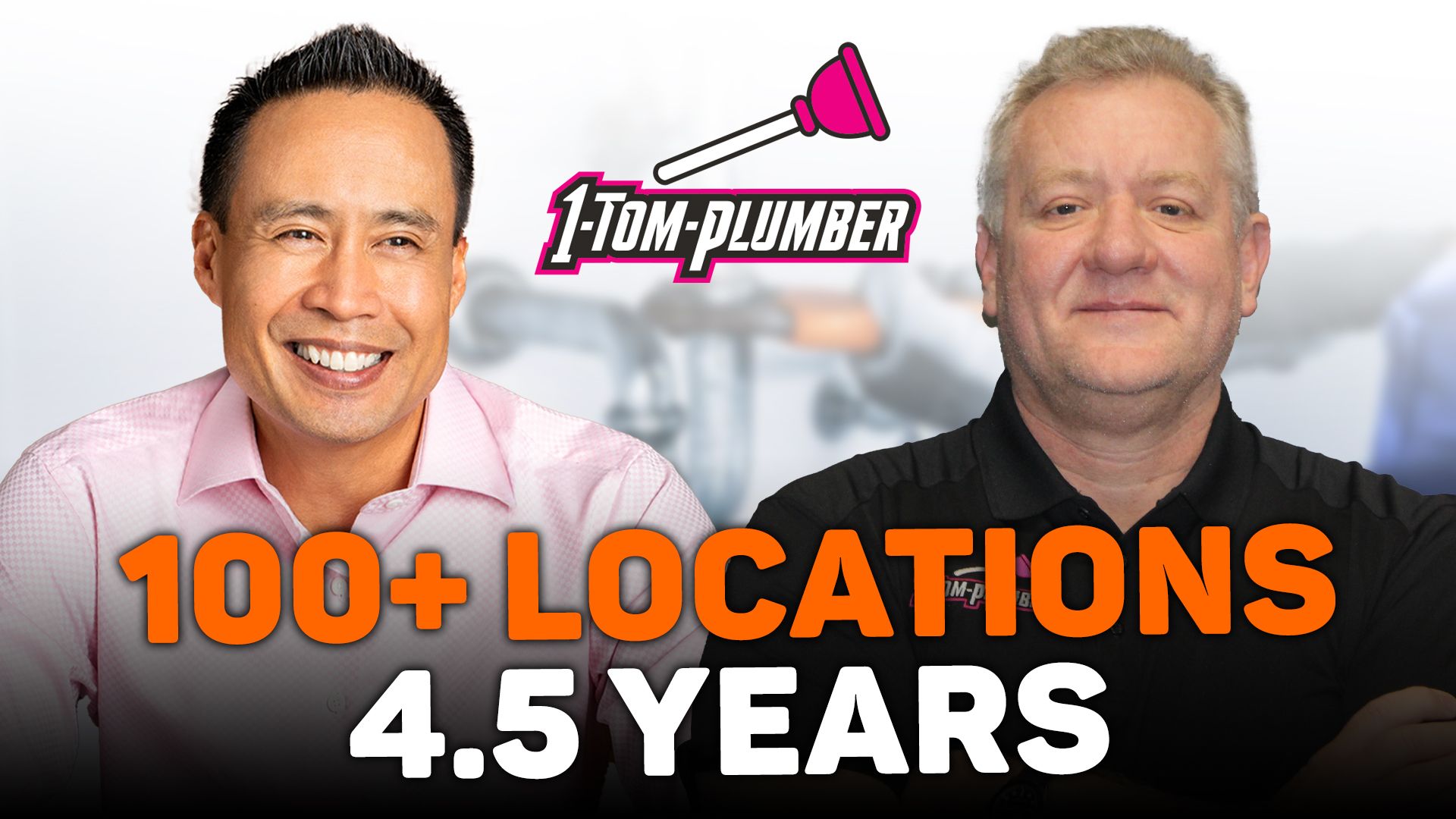
A great example is 1-Tom-Plumber, we got it to 110 franchises in four and a half years. We sold four and a half years into franchising, because I always say good walks down the street. What that means is if you've got a good employee, I'm recruiting to replace them, to be honest with you. I want the 20 percenters. What I mean by that is 80% of all work gets done by 20% of the people. That's a mathematical fact, some industries it's 75-25 or whatever. But I want those 20 percenters, I want the 20% that does 80% of the work, and we're constantly recruiting until we get those people.
I don't get mired down with the loyalty factor. Now, if somebody is talented and great, they're going to make more money, they're going to have more fun, they're going to be surrounded by other winners, other rock stars, 20 percenters, whatever you want to call them, and that's a great environment to work in. But if you're not one of the 20%, you're going to get rotated out. And once that happens, that rocket ship, it's amazing how it takes off and you leave the competition behind.
That's part of my system, literally just constantly recruiting better and better talent to fit the system that I put into place. And I've had people say, and I'm sure you've heard it too, they helped me get started, they didn't do it for free. You always had to be the last person to get a paycheck so they could get a paycheck. They're not coming over eating dinner at your house.
An employee, I always try and tell people, is someone you're paying for their time to do things the way you want things done. Now, if they're great, you want them to feel part of the company and always be getting their ideas and helping them build this company, because most of the people I hire are smarter than me. But I'm smart enough to hire smarter people than me, you know? And that's what I mean by the system, bringing people in constantly to make the system better and better, depending on what widget, whether it's solar, whether it's plumbing.
And keep in mind, I was on one plumbing job, and we built an almost $100 million plumbing company with me being on one plumbing job. The reason is because I just know systems, and I know how to put people in place to let them thrive.
Alan: That's great, Rocky. I love how you frame that because I've never really thought of it that way. The boosters, letting go of the boosters that help you get to where you want to go, help you get off the ground, but they may not be the right people to keep you going forward in the direction you want to go. I never thought of it that way, but I think everybody experiences this when they first start out, that you bring on who you bring on and they are the right people at that time, and I couldn't have done it without those people.
Same with me, installers, designers for my franchise business, the right people at that time, and it got to a certain point. With my designers especially, my design consultants in my home improvement business, after the first couple of years, I was like, wow, I was doing pretty good as a design consultant. I was terrible at the beginning, but then I figured it out. I kind of had this mindset of like, wow, I'm doing pretty well, but the rest of my team isn't really doing as well. For me it was like, well, maybe it's because I'm the owner, right?
And then it wasn't until I brought on someone that was really quite good that wasn't me, and I was like, oh, it is possible. It's all these other people, and it was the boosters. And so it was time to kind of freshen things up, clear things out, bring out the old, bring in the new that was just better. The bar has been raised, and so I've got to level everything up to meet that.
Rocky: And that's the case. Those people want to work with other people, other talented people. And if you've got one or two and six others that aren't that talented, which way do you think it goes? Those talented people take their foot off the gas pedal a little bit, because they're like, hey, these people are getting away with it. It's a mental thing, sometimes they don't even realize they're doing it. But if you've got six of those talented people, you'd be surprised at how they'll bring up the other two.
But in my opinion, part of my business model is I'm recruiting for those two positions, because until I get the right person, and sometimes you hire a worse person, well guess what, you're still recruiting until you get the right people in that position. The other thing you have to do, if you've got the right people, the rock stars, you have to make sure they're making enough money that they would have to take a pay cut to leave. And that's where culture comes in.
Culture is a big thing, but it's an overused term at the same time. I hate the word culture, but it's truly what you need to be successful. I'll give you an example of what I'm talking about, if you'd like.
Alan: Yeah, please.
Rocky: When I say it's an overused term, I don't want to sit around and hold hands around the campfire and sing songs with my employees. That's not when we sing kumbaya. I don't mean we have to have peace and love and all get along. We had four things that were our culture in every business that I built.
First and foremost, we have a profit culture. We talk about profit all the time. Even in the trucks with 1-Tom-Plumber, we knew the profit of each truck, and we go through that with each individual technician, the profit piece. The reason we're okay with doing that, now we don't tell them how much the company is making, but they need to understand that they can't have the best truck, the best tools, the best equipment, the best of everything if they're not producing profit. That's the only way you can buy those things. And by the way, do you want to make more than any other technician out there? Well guess what, you've got to be one of the most profitable people. So we have a profit culture and we go through that.
Secondly is KPIs. There's no one, including receptionists, that doesn't have measurables. KPIs is the generic term, we'd call them measurables, indicators. A receptionist is a great example. People are like, well, how do you put a measurable on a receptionist? Well, our receptionists have two measurables. One, what is their closing ratio, how many people did they put in the house. Because that's what a receptionist job is, they're the first sale. I mean, it's all sales, don't kid yourself. And if you're not training your receptionist and listening to those calls, you're failing from literally the first step. So what is their closing ratio? Our receptionists, which are also dispatchers at 1-Tom-Plumber, if they don't have an 85% or higher, they go back to training, or they're not part of our world. We're really pushing them to get to 90, which is a really hard thing to do, but they stay within 85 to 90%.
And two, did they smile on the phone? When we're reviewing at least ten calls a week, did they exude, did they smile on the phone, did they make that customer feel like we were going to get their need taken care of, did they make that customer feel confident? And that was it. When we would listen to those ten calls, we would grade them by those things, and then we would do monthly reviews. It was the same with every single person in the company, including me. I want to make sure my team knows that they're my boss. I have to be accountable to them, not the other way around, because if they're hitting their measurables but I'm not giving them the best equipment, the best of everything they need to do their job, that's on me. We end every monthly meeting by asking, what do you need from me or this company to be as amazing as you can possibly be? That's how we end every monthly meeting.
So that's the second one, the KPI driven culture. Third is we have a FIFO culture. I don't want a bunch of people that have to run to their manager. What we call FIFO is figure it out, we use a different word, but I want people who solve problems. I want people who are faced with something and they figure it out.
I'm okay with them making mistakes. I'm okay with them learning. I'm okay with them costing the company money because they made a mistake, but as long as they're driving it forward and learning from it, going, well, that was stupid, I won't do that again, but also saying, wow, that was great, let's try more of this and less of this. I only want people who don't run to their manager every time there's a problem. Or if they do have a problem, they don't walk in telling the problem, they walk in saying, hey, I have a solution, I want to run it past you, do you think this is the best solution? Because now there is no problem, we're just trying to find solutions to road speed bumps. That's all problems are, speed bumps, and when you quit calling them problems and call them speed bumps, it changes the mindset.
And fourth, and almost most important, is am I my brother's keeper? Now that might not be as politically correct as it was 20 years ago when I was first in business, but what I mean by that is, are we helping each other? Are we always looking out for each other? If the receptionist is busy and the phone's ringing, everybody has to help. If it rings one time, they answer it. If it rings more than that, it goes to someone else, and everybody has to pick up the phone. If somebody has a problem, they're not afraid to call someone and say, hey, I've got this really hard customer, give me some ideas or solutions. If we're going to a golf outing because we're trying to sell something, every salesperson has to go help that person get set up, even though it's a commission driven business and they're not making a penny from it, those people have to go help them set up for golf outings or show up at events and pass out goodies. Are we always helping each other, do we always have each other's backs? That was our culture, and we preach it and talk about it literally monthly.
And if you fit that culture, you're going to make more money here than anywhere else, and you're going to be happier, you're going to work with rock stars, you're going to get the best equipment, the best of everything. And if you don't, it's only because you didn't ask for it at the end of that monthly meeting. We always kid around and say, look, it's got to be reasonable, you can't say, man, I could sell so much more if I was driving around in a Ferrari.
Alan: Yeah. No, that's great. That's powerful stuff. I mean, those are amazing gems that you've just provided, nuggets of wisdom for people to be successful in their businesses. I want to take a quick segue, though, and we're going to circle back to some of these things you're saying in a slightly different way, but I want to segue into 1-Tom-Plumber specifically. I want to dive into that business, but I want to start with how you created this, how you came up with this business, and if you had franchising in mind or not, and also how you specifically came up with the name.
The Origin of 1-Tom-Plumber
Rocky: Oh, I love that. Well, I had a company that I sold, it'll be two years in September, to private equity, called Icon Property Rescue. Icon Property Rescue specialized in commercial, like the Amazons of the world, the high rises of the world, basically Servpro for Cintas, big warehouses and four story office buildings, things like that.
And I had Packouts, 1-800-Packouts, we owned three of those franchises in three different cities. What happened was that was a lead generator for 1-800-Packouts, because if there was a fire or anything, we'd go grab all the stuff, bring it back, clean it, fix it, and then pack it back. It made me realize how important it is to have a lead generator and a franchise, a support company.
For that, we would constantly be waiting on plumbers to show up, because the reason we would show up usually was a busted pipe, a sprinkler system went off, a toilet line busted on the 15th floor and drained all the way down to the 12th floor, because those pipes are big and there's a lot of water coming out in these big buildings, machinery, and so on. I just literally got tired of waiting on plumbers. What I realized was there's no true emergency plumbers. There's people who say they're 24/7, but that just means usually they answer the phone and schedule you up the next day.
So I wanted to build a true company that was an emergency service plumbing company. You can't do remodels, rebuilds, build outs with 1-Tom-Plumber, because you're going to tie up your guys, because that's what most plumbers want, they want to schedule their guys out two, three, four weeks and be busy ahead of time. What we realized is the real money, the real profit, is in the emergency and service work. So that's what we focused on, that's what we sell, and that's what 1-Tom-Plumber is.
We tie it into a restoration company too, so for example if Amazon's water line busts, we go fix it, and then we send in a restoration company, our restoration company, to dry it out and do what it does. So 1-Tom-Plumber was a lead generator for us, first and foremost, that's what it was designed to be. What we realized pretty quick was how profitable the emergency and servicing piece was, so we really put a lot of focus into growing it.
Once we had our proven business model, we went out to franchising, and like I said, we had 110 of them. It wasn't just restoration companies, it was some retired high end C-suite people that bought franchises. We converted probably five or six different plumbing companies that wanted a system and wanted more profit, what you'd call chucks in a truck that didn't know how to get to the next level, they had two or three guys and just didn't know how to get there. So we were targeting people in those types of situations that needed the lead, or wanted to take it to the next level, city by city.
Now, how the name came up. 1-Tom-Plumber is 1-866-Plumber. I went out and bought the phone number 1-866-Plumber. This is kind of a funny story, the true story. The great thing about Cincinnati, where we're based out of, is Procter and Gamble is here, which is the second biggest branding company in the world. They've got Crest, they've got Old Spice, they've got Dawn, they've got Tide, some of the biggest brands in the world.
There's so many little support companies that help build those brands. In 2016, when I first came up with the idea, the economy still wasn't 100% back, so I was able to latch onto the same people that were branding Tide, Old Spice, and one other company that was a support company, to help me build the brand for 1-Tom-Plumber. So I sent them 1-866-Plumber and said, how do I sell this? They came back and said it's 37 impressions, which at the time 24 or 25 was average, and they're saying nobody can figure you out from 866, 855, 1-800-Plumber, 1-844-Plumber, there's too many 1-800-something plumbers.
So we looked and saw that 866 spelled "Ton." So we were like, okay, One Ton Plumber will save you a ton of money. We thought it was catchy, we brought it back, they said no, everybody in the market studies is picturing this giant guy with his crack hanging out. So we found that Tom Crapper was the plumbing guru, I mean, a hundred something patents, he's the one who really created indoor plumbing and all that stuff. So we sent it back to them, and they came back again and said, you're sending us a guy from the 1800s, but you're saying you're the new company, you're the future, you're doing this. Basically they were firing me, and I was a little bit mad because I was $200,000 into this company trying to figure out how to brand 1-866-Plumber.
And I didn't have anything to lose, and I literally said, it's 1-Tom-Plumber, the name is the phone number. And some guy in the back goes, we could brand that. I was like, put that guy on the phone. So we took 1-Tom-Plumber, the name is the phone number. And they went back out to market, and it was four impressions, the second best brand they'd ever had as far as number of times people hear it before they remember it. It's just like 1-800-Flowers, it's a stupid name, but it's four impressions, people remember it really quickly, and it's a $12 billion company.
So we went to market with 1-Tom-Plumber, the name is the phone number, and people remembered it and picked up on it, and we grew like crazy. We started bringing in talent and people and took off like a rocket ship. And literally when we sold, when we were selling, we didn't use a broker, we were probably two years early from when we wanted to sell, but people were really trying to get into the trades right now, and we sold it for such a high multiple.
Alan: Wow, okay, that's an amazing story, I love that, that's hilarious how the name came about.
Rocky: And that was over, the one thing too I'll mention, that was over like eight months, just going back and forth with these guys, I just told you the short version, but sometimes the great things come out of the worst circumstances.
[AD READ]
Alan: That's a fantastic origin story, I would love to hear, now kind of moving more towards the franchise, a potential franchisee looking at this business, what obviously started as kind of emergency plumbing, is that still the core of what you provide, or is that the only thing you provide, or do you also provide other plumbing services as well?
Rocky: It's kind of the theme, it's the one easy thing to sell because everybody needs emergency service plumbing. Only about probably 18%, if I remember correctly, of our work is true emergency, and most of it is scheduled work, but it's scheduled service work where we go in and fix things. That's all we do is fix things, like I said, you still can't do remodels, build outs, you can't tie your guys up.
And it's fun because you get to be the hero every single time, and we're set up so systemized that anybody can do it, even a guy that didn't graduate from high school and has been on one plumbing job. So we set it up to where you can literally buy a 1-Tom-Plumber, and if you follow the steps, you can build a pretty incredible plumbing company without knowing how to do plumbing. It's all about the people, the talent, the technicians, and the way you structure it, but it's got to be someone who wants to be an entrepreneur. It's truly an entrepreneurial endeavor.
Alan: Tell me more about that. I was just about to ask who your ideal client is.
Rocky: Yeah, we sell to former C-suite people that now want to get out of corporate and do their own thing and don't want to answer to anyone else, play politics, or any of that. It's a plumbing company that wants to be more, it's a restoration company that wants to be more. And then we've got a guy in Michigan named Dave that owns four or six of them, and he's just a money guy, and he hires talent at each location, systems people, to run the business.
We always say you need great technicians, no question, but really the people in the office, as long as they follow the system, you're going to be successful. So that's what he does. We've got a guy actually in Seattle, Washington, owns four locations, he's an investor, he bought four of them and hired the right people, put them in place, and they're killing it. He started with two and now he's bought two more.
Alan: How does that work, let's say for an investor like this, someone who wants to build a big business, multiple locations, they're not going to have a plumbing license. How does that work for someone like that?
Rocky: It's a great question, and a plumbing license is one of the easiest things to get, especially with our model, because most of the stuff we do is fix stuff, so you don't need to go get permitting, you don't need to spend time with that. You do have to have a licensed plumber, but they can be on staff or part of it, they don't have to be an owner, and it's state by state how you do it, so you can hire them at different dollar amounts depending on how much you're going to use them and need them.
The business kind of runs without them, because the only exception, we've got some cities where for a hot water heater you need a permit, well, he's going to have to go get a permit to do that. Here in Cincinnati, we've got an area where we just don't service water heaters, because it's such a colossal pain to go get a permit at midnight, you've got to tell a customer I can't come and do a water heater because it has to be permitted. So there's a bob and weave there as far as the licensing is concerned, but everybody has to have a licensed plumber. It's a retiring community for the most part, so finding a licensed plumber is probably the easiest thing we're going to do for you. But it's still a matter of rotating out good.
I've had so many people say, man, I love this guy, he's good, well how's he doing, what do his numbers say, what's this, what's that. He's okay, I don't even know if he's good, you know, you need to recruit his replacement. If you want to be successful, it's okay with good. If you want to be good, that's what you're going to get. If you want to be highly successful and spectacular and highly profitable, you've got to recruit talent.
That's the only thing that differentiates us. We're pink, we've got the pink plunger, it's cool, we're women driven, 83% of our calls are women, so we knew who to brand it for. We've got computers, desks, offices, trucks, the same equipment. The only difference between us and the competition is the people we hire and our systems and the culture that we build. Those are the only real differentiators from our plumbing company to other plumbing companies, their system, our culture, and the people. We just got different colors, different trucks, but it's all the same equipment, same trucks, same computers, same everything. We just got different colors, different systems, and different people.
Alan: I love it, that makes sense. Okay, so I want to go back to that investor example, someone who's going in, is that person now, is this a full time business for them, or is this something that can be started semi absentee, obviously we're talking about hiring good people, but is that something you work up to?
Rocky: It's different. The entrepreneur that wants to run the day to day, it's a full time job until he gets to a certain point. Until they get to probably eight trucks, then they don't have to be there as much because they've got the support in the office. When it gets to about ten to twelve trucks, honestly, the system is such that they probably don't have to be there at all if they don't want to be.
Someone like Dave from Michigan, Dave, if you're out there, what's up, how's it going. He shows up maybe once a quarter just for financial reviews and things like that. He's on the phone regularly because his franchises are in Florida, so I honestly think he originally bought them so he has a tax write off when he goes to Florida part of the year. I don't know, but he's not an active participant other than hiring the people running those things, and he looks at the measurables and things like that. But no, you don't have to be there if you hire the right people, and they learn the system and follow the system, his job is to write checks until it turns from red to black.
Alan: Got it, I like it. Okay, I want to circle back now, you gave us a lot of great insights earlier about what it takes to build a great business, having a great team, culture, getting the great people, removing the good to bring in the great. How are you helping your franchisees do this? Because you obviously can do this yourself, you've done it many times, many businesses. So now the key is for your franchisees who would love to build great businesses for themselves, how are you able to transfer this information to them?
Rocky: It's a great question, and I wish I could solve this 100%, it's a riddle. You can tell the great franchisees by one thing, are they following the system? If you follow the system, you're going to be successful. I literally just closed last week, I bought the Sarasota 1-Tom-Plumber, because it's a great market, I have no idea why, but she was struggling. She wasn't following the system.
There's two reasons, I'm sorry to divert here, but I think this is really important. If you want my mindset, every problem you have in a company is because of one of two reasons, and one of two reasons only. One, you don't have a good system. And two, and probably the most common, is you're not holding your people accountable to follow your system. Because if you follow the system and you're constantly making it better, you've got a great company. If you have a problem and you don't have a system in place, like hey, my receptionist isn't doing very well, well, let's put a system and some measurables in place.
So have a system, hold everyone accountable to your system, but also hold people accountable to constantly be making that system better and better. We call them lessons learned. Having said that, she wasn't holding people accountable and she wasn't following the system. The good operators are the ones that make people follow the system, and they're also constantly giving us feedback on how to make us better and what training they need, profitability training, things like that.
We were constantly, because I'd never been on the franchisee side, our first 20 franchises helped us build the company, because I didn't 100% know what they needed. I knew what I needed when I owned the 1-800-Packouts franchises, but these guys are so different because of the different areas they're in. The New York guy, they do big digs, they've got unions to deal with, all this other stuff, where the Florida person doesn't even have basements. It's a completely different market, so we had to develop, we had to bend, we had to be like Marines, adapt and overcome for every situation, every setting, every location.
How we learned how to do it and how we gave support was basically when they would ask for it, we would do a huddle up, put things in place, then ask them how it's going, and constantly have them part of the solution solving as we went forward. The people that are killing it are the people that were actively involved in that, that were following the system and helping us make the system better. God love her, but she wasn't one of those people, and I hate to say it, but it's that simple. If you follow the system and you're constantly helping make it better, giving ideas and suggestions, you're going to thrive.
If you're not all in, if you're not, I always say a predator, I know that's a bad term, but it's true. You've got to get out there, you've got to eat what you kill. Everybody's trying to take your stuff, your competitors, it's a war, competition, that's commerce. And if you're not prepared, if you're not a predator, if you're not someone who's going to go out and battle and fight, and you're not holding your people accountable to do that, then you're not going to be a great operator, in my opinion.
Alan: Yeah, no, it makes a lot of sense what you're saying, and it's so funny, as you're saying all of these things, it strikes a chord with me. So much of what you've said, your suggestions, really strikes a chord. I was a franchisee for 14 years, I was a top performer in my system, and so many of these things run true. Accountability, lifelong learning, just being proactive really for your own success. At the end of the day, it's so important, not waiting for things to resolve themselves, you've got to be proactive in solving problems, having systems, being accountable, making things better over time.
It's so funny, I've actually this summer piloted a course that I've been working on for franchise owners, and it went really well, and I've learned what I am going to create next, which is a franchise business coaching program, basically for new operators, or anyone in franchising who wants to get better and improve, and hopefully eventually sell their business, have that in mind as the endpoint. So much of what you said really applies to that, and I'm excited to get this out in the open so I can share it with you and get your feedback on that.
Build a Business You Want to Buy
Rocky: I love that, I love hearing that. Let me know if there's anything I can help with, because a lot of what you're hearing, I had great mentors. I always had mentors. In the 1-Tom-Plumber space, I had a mentor named Philip Schramm, who owns Buffalo Wild Wings, and he would literally come to our EOS meetings sometimes. Always have a mentor too, because you don't know everything, and people that have been way more successful, that's who you surround yourself with.
But I can tell you, a great mentor told me a long time ago, the second business that I sold, I really didn't get as much money as I wanted for it. I sat down with him and I said, but I did this, I did this, I did this, I built a business that I think has a lot of value. And he goes, what you built was a business that you wanted to sell. He goes, the only way you're going to get top dollar is you build a business that you want to buy. And when you can build a business that you pull yourself out of, and you go, I want to buy that, I don't have to be there, I've got great people, I've got amazing systems, I want to buy that company, instead of building a business that you think you want to sell, build a business that you want to buy.
Once I learned that trick, to pull myself out and literally ask my mentors, is my business something you want to buy, and once I kind of tweak things and fix things to where they would go, yeah, that's a business I want to buy, then you get top dollar for it, you get the highest multiple. That's what it's about, the highest multiple when you sell it. 1-Tom-Plumber is a great example, we had three giant companies trying to buy us, it was, I almost felt like they were ambulance chasing us a little bit, and we kind of played them against each other and picked the best one.
We actually settled for one that was, this might give away how much it was, but we took millions of dollars less for the sale because we felt like this was going to be the company we could buy back in and make a way bigger amount down the road. And we were right, so far so good. Me and my son, my son owned 30%, he was the president of the day to day of 1-Tom-Plumber and took it to new heights. He started in a truck, he's a two state licensed plumber, so he actually knows how to do plumbing, and he drove it to places that, like I said, we weren't really ready to sell it, but they offered us such crazy money. We sold it on Black Friday, the day after Thanksgiving, which we now refer to as Green Friday.
Alan: I love that, that's so smart. In this course I had piloted, that was my big thing, build a business someone wants to buy.
Rocky: Obviously building one that you want to buy, that's just my philosophy, it doesn't make me right.
Alan: No, I'd love it, I mean they both make sense, or a business you want to own, it's the same thing, it's the thing that runs itself, it's the thing that makes lots of profit, and you get to choose what you want to do. So whether you keep it because it's so profitable and hands off, or you sell it for a great multiple because it's so attractive for someone to want to buy, it's really the same thing.
Rocky: I love it, and I can tell you, I get asked a lot, how do I know my business is successful, like when do I know, okay I can take a deep breath. For me it's two things. One, do you have to be there? If you don't have to be there, that's definitely a really cool thing. And two, for me my measurable is 20% net profit, and I always say taxable, if I told you what I paid on taxes, because you can't argue that. As business owners, everybody out there, you can move stuff to this year or that year, move stuff around, buy trucks, all this stuff.
But we made sure, we fought for it, that we paid tax literally on a 20% net profit company, year after year after year, and trust me, if we didn't try and do all the things we mentioned, like company cars and things like that, hopefully it's over 30%. But if we filed taxes on 20% net profit and I didn't have to be there, I had a successful business, and that was the goal for us. That was what we were, I never wanted to be the biggest, you know, 1-Tom-Plumber was definitely growing and it was giant, but some of the other businesses, like 1-800-Packouts, we were only doing eight and a half million, but we were a 20 plus profit company, you can do the math, it's still a really, really good living. I always say I file taxes on it because I can prove that, a lot of people say oh I was 20%, prove it, and you look there, well it's because we did this and moved money. No, I wanted to file taxes on 20% net profit, and still do.
Alan: That's awesome, it's a great goal, that's amazing. I know you don't have a whole lot of time with me here left, but I've got so many questions, hopefully I can nail this down in just two. So really quick, when you talk about selling the business to private equity, I think there's some fear from other people out there, like, what happens if this gets bought, and then they're just trying to build it up and flip it, and the franchisees potentially are the ones kind of losing out. Can you speak to that a little bit?
Rocky: I can, and you've got to, it's like I said, we took a little bit of a haircut on the top dollar because we wanted to make sure that our employees, and this company was a $14 billion company that bought us, I think maybe 12 billion, I might have exaggerated a little bit there, but they had a great track record of keeping people, not only keeping people but promoting people when they would take over franchises. And two, they had a great history of building them and building the value the right way and reselling them again down the road for exponentially more money than they bought it for.
Because the very first private equity purchase that I did, it was exactly what you just said, everybody was a number. I got a big check, so it was game changing, life changing, but I didn't look at those boxes, and then I looked back and I felt bad, because I sold to a company that wanted to build and sell and didn't care about the human side of things. So it's definitely something you want to look at and make sure, but trust me, if you've got a business that's worth buying and that you want to sell, there's people out there you can find, just take your time and look into them.
We talked to other people that they had bought, we talked to probably at least six different franchise owners that had sold to this company over the last, one of them sold 12 years ago, so we had a 12 year history. It's a great question, and you really want to look out for people who helped you get there. But at the end of the day, our franchisees, if they could sell, a lot of times they'd sell, not really consider us, so it's a little bit of a give and take. It was too important to me and my son Cameron to make sure that we put the franchise and the franchisees that helped us get here in a good way. But as you know, 20% of those franchisees could care less, they would have sold to whoever bought the company, but it's the 80% that did care about us, that did look out for the brand, that helped us build it, that we wanted to look out for.
Alan: That's great, that's great. Well, I know you've got to get going, if you've got just the last 20 seconds here, what advice do you have for anyone looking into franchising as an alternative to the corporate world?
Rocky: Talk to franchisees, don't just talk to the ones they give you, literally Google other ones and pick up the phone and call them. I did that, I just bought five more franchises, two Kitchen Guards and three Seals, and I Googled the different areas in the cities and randomly called people. And it actually changed my mind on one I was going to buy, because I talked to not the ones they gave me. So look deep into it, make sure it's a good system, make sure you have good support.
The cost is relative depending on what you're getting, I mean McDonald's is what, $3 million? Not everybody has that. Some franchises, like the Seals I bought, are about $50,000. My long winded point is you've got to make sure you're going to make money, you've got to make profit, and make sure that the people in the middle, not the high producing franchisees like me and Alan, are making money. If they're making money, I know I can make money. So do your homework, validation calls are important, talk to people, do your research, don't be in a hurry, and make sure you're going to make money.
Some franchises are set up to where you make like X, and they just have so many of them, you have to buy 20 of them to make money, and that's for you to decide if that's what you want or not. I wanted franchises that I could have a few of, and if I was able to build it up, again, under do I have to be there and am I making 20%, and if that's something I thought I could do, I bought five franchises because of that, and I believe in both of those franchises.
Alan: That's awesome. Rocky Hensley, I appreciate you joining me today, sharing all these fantastic nuggets of wisdom, and congratulations on being a franchise champion.
Rocky: That's only because I got great people. I'm sitting in here now talking to you like I'm the smartest guy, you walk out there, I'm probably the dumbest guy, and I'm happy to say it. The one thing I'm smart about is hiring smarter people and better hard working people. And if you do that, the sky's the limit, guys. And Alan, you know that, man, year after year, you chugged it, you did it, you made money, and now you're sitting here doing what you want to do, because you were able to do that grind and you had the right people around you.
Alan: Absolutely, absolutely. Thank you, Rocky, I appreciate it.
Rocky: Yeah, it's nice meeting you. You take care, we'll talk to you later.
Alan: All right, thanks guys.
Don't miss a beat!
We hate SPAM. We will never sell your information, for any reason.