From Wheelchair Crisis to Founding Liftology: Jennifer & Gordon Raney's Franchise Journey
Dec 09, 2025This is a transcript from Episode 17 of The Franchise Champion Show. Listen to the full episode on Apple Podcasts, Spotify, or YouTube.
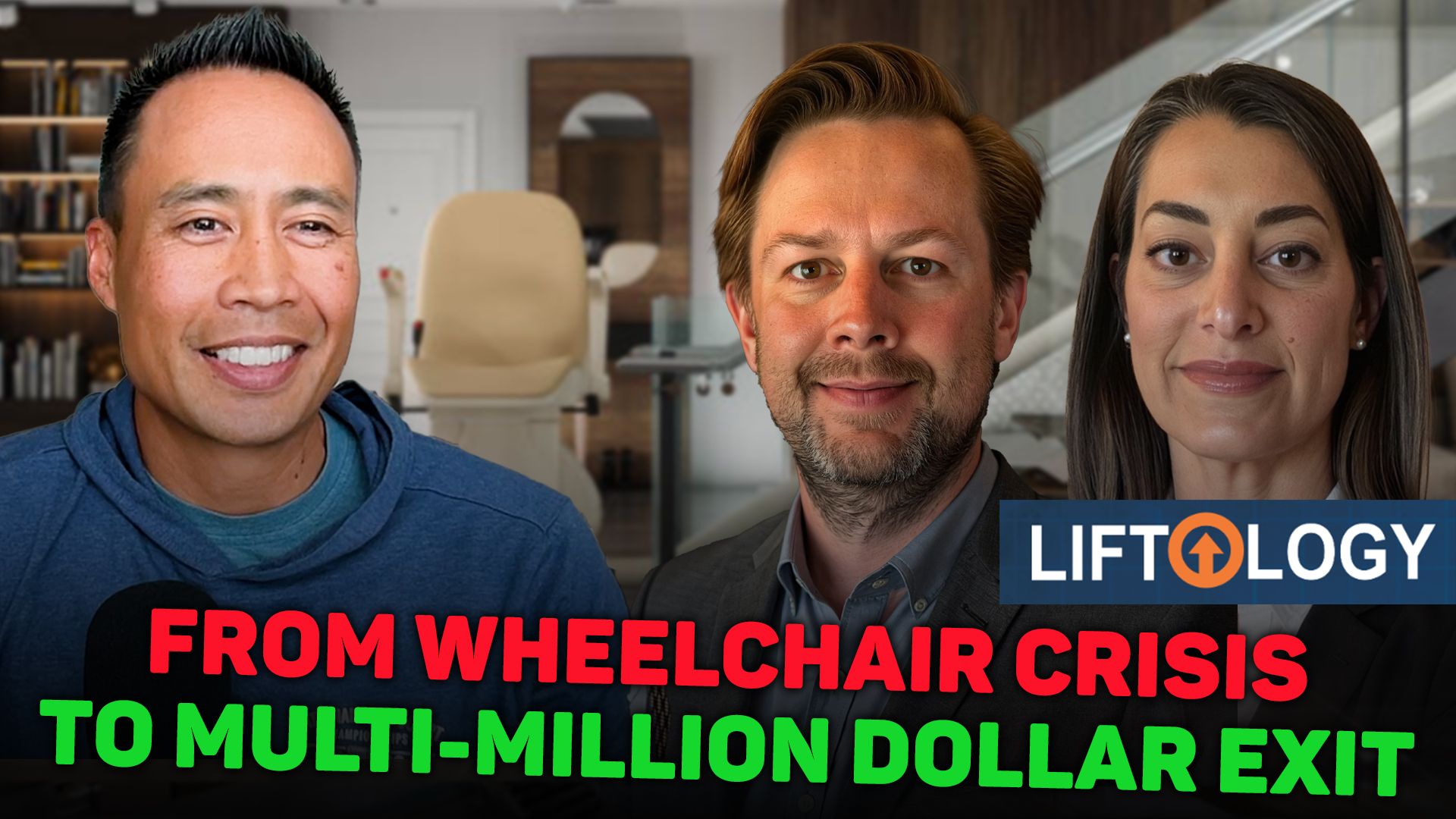
Alan Regala: Our next guests are a husband-and-wife team who were multi-million dollar top performers in their previous franchise business, 101 Mobility. After taking some time off, they're now back in the industry and ready to dominate as franchisors with their new company, Liftology. Welcome to the Franchise Champion Show, Jennifer and Gordon Raney.
Jennifer Raney: Thanks, Alan. It's good to be here.
Gordon Raney: Thanks for having us.
Alan: Yeah, so I'm super excited to chat with you guys. Let's start off with this—how did you originally get into franchising?
The Corporate Background
Gordon: As an owner on the franchisee side, it's actually interesting. We may have a background pretty similar to maybe a lot of your customers. We had the corporate backgrounds. I was a CPA, MBA—kind of a finance and accounting person overall. Jen has sales and marketing, also an accounting background.
You know, out of college you go the Fortune 500 company route and you get the office job and the desk job, and you think that's what you want. And maybe that changes over time and you figure out something that's better.
We're not your typical entrepreneurs, most likely. I'm actually fairly risk-averse at the end of the day and fairly methodical and calculated. And so it was hard for us a little bit to get into the franchise mindset. We were about 30 at that point in time, and we had great jobs. The jobs were so good that no one ever left these companies, and there wasn't any advancement and there wasn't any opportunity to kind of make more out of that situation.
So we said, well, let's start looking around at franchise opportunities. We approached a broker and we were getting submitted a lot of different opportunities. And none of them really kind of clicked with what we were looking for and what we were thinking. And honestly, we probably didn't even know what we were looking for.
The Personal Crisis That Changed Everything
But an odd thing kind of happened. On the personal side, my father ended up with some health complications from a surgery and temporarily found himself in a wheelchair. And so I go out to North Carolina and it's a unique situation. He finally comes home from the hospital—can't get him up to the bedroom. He's got a big spiral staircase. Can't get him upstairs. The bathrooms are up there. I don't know what to do with him. I've never heard of these types of products. The mobility industry and the products were very new at that point in time.
So we struggled through that. We had nurses come in a couple times a day and help him out, and he basically lived on a couch for a couple of months. We kind of got that stabilized and we came back to Dallas, and believe it or not, within about two weeks we were approached with the idea of a mobility company.
And at that point, there were no other options. 101 Mobility was the group that was kind of pioneering this industry. And we said, this makes sense. We literally just went through this for the last couple of months, and we basically had no one to help us and no answers and no ideas of what the solution was. So I absolutely kind of see the need for it. And that was the light bulb moment for us—this is what we need to strongly go after.
So that's kind of how it happened. It's not like it was part of the overall plan. It's an industry that we knew nothing about and was probably fairly far from what we thought we'd be doing.
Alan: Yeah, that's really interesting—the timing of that. Going through that personal experience with your family to see, I guess, to really establish the need for it beforehand and see what life looks like without this type of service, and then having it presented to you or fall into your lap right afterwards.
Gordon: I mean, it basically hit us over the head is what it did. But it made perfect sense in the moment. And we quickly kind of jumped into the operation there, and it immediately took off.
The Leap of Faith
Jennifer: Yeah, actually Alan, our original goal was that Gordon would step into 101 Mobility and that I would stay and keep my main job and keep our insurance and that sort of thing that people always worry about. And I think it was probably month one or two, we realized immediately that this was going to be all hands on deck—that this was going to go, it was going to be big, it was going to be busy. And so I stepped out as well and joined Gordon full time almost immediately. And then we worked together the remainder of that time and have ever since.
Alan: Wow. Okay, so that's really interesting. It sounds like the plan initially was for Gordon to start full time and you were going to stay at your job, Jennifer. I mean, what was that like and what exactly was happening in the business that made you feel like you needed to jump ship?
Jennifer: Right. I think all of the above. I think we were open and absolutely interested in both exiting the corporate role and moving into our own business. But like a lot of people—us included—that's a big jump, giving up both salaries at one time, giving up your health insurance, all the things.
And so I think really the minute that we could see the opportunity—I mean, we knew it, we'd done a lot of analysis, a lot of research. Gordon actually did M&A due diligence for a number of years in his role, so he had evaluated companies financially and we had done all of that ahead of time. We felt really comfortable about it, but we didn't realize probably how quickly we felt like it would go—that we could see this is gonna happen, this is gonna pay our bills, it's gonna grow, this is gonna be what we do moving forward.
And so I think the minute that we really could see that, number one, it was so busy that Gordon needed help quickly. And number two, we could see the opportunity really was like this will outpace our day jobs pretty quickly here. And so we felt comfortable to say, let's go all in and do it. So we did.
Alan: Yeah, that's incredible. I understand when a business is so busy that you just need help and support, but to be able to see so early on the potential of the business and the opportunity that's there and then to make that leap—I mean, that's quite a leap.
Jennifer: It is. It is. And we got really busy really quickly. So like I said, we could see the opportunity, the calls, the opportunities that were coming in. We could see the scale of that and feel comfortable that that would be pretty quickly leaving us in a good position if we both stepped out at the same time.
Alan: All right, so it sounds like, Jennifer, you jumped ship shortly after Gordon jumped ship to start this business. I mean, that is not a lot of time to see how things go before leaving your job. Most people, in an ideal situation, they've waited some time, the business is up and running, and they've made some income so that they can justify leaving their job. So that must have been a really scary thing.
Jennifer: It wasn't terrible. And like I said, we were open to the idea. So it wasn't like it just came as a shock. Certainly our maybe long-term goal was that we both step out and do it together. So really for us, it was great news to be able to do that pretty quickly. So we were excited about it. We were comfortable. And honestly, we did it. We never looked back.
The First Couple of Years
Alan: That's awesome. That's awesome. So okay, what was that like—your first couple years in business, your first year?
Gordon: It was all new learning experiences across the board for us. We kind of had the corporate backgrounds, but now decisions matter a lot more when it's your own business. We were fortunate enough that we had a lot of early demand. A lot of what became hectic for us was we ended up having to cover a much bigger area than we ever envisioned. That's actually kind of what fueled our growth.
And how we ended up—eventually we were in three states with four physical offices and we were even servicing some other states. But that wasn't exactly the plan initially. It was that's where the demand for this product type was and there's not a lot of people kind of performing this work and it is a little bit of a niche product, especially back then. Now it's becoming more mainstream, but we were in Texas and it wasn't unheard of for somebody in Oklahoma to call us or somebody in Arkansas or Missouri to call us because even being one or two states away, you're still kind of the closest provider of certain brands and certain products and are able to do certain installations that other people can't.
So that kind of created a lot of the hectic nature as we were honestly growing a little bit too fast. We kind of made some decisions—even our initial office space, we kind of had a one-room office and we had some storage units and things like that and we thought that that would last for a while. And a month later we're moving into a bigger warehouse because we just realized very quickly that that wasn't gonna get it done. So we end up having to break one lease and sign another one within the first month of our startup business.
But that's good problems to have. You want to have the phones ringing and people calling and jobs to actually get into. But it was much faster than anticipated. I'll admit that.
Understanding the Mobility Industry
Alan: Yeah, you know, that is a fantastic problem to have when you've got the demand side there for sure. Let's take a step back and just tell us a little bit about this industry and what the services you guys are actually providing.
Gordon: Yeah. You know, we refer to it as just mobility equipment. A lot of people don't know what that is. We get a lot of folks that think, oh, you do cell phones. It's a completely different industry.
What it is is we're providing solutions and it's usually a product that goes with that that involves an installation. But we're providing a solution to somebody who's got a challenge, a physical challenge in their home, a barrier that they're trying to overcome.
So a lot of people—it's very common—stairs are an issue for a lot of different reasons. So stair lifts are a big product of ours. Wheelchair ramps. You get into small elevator systems and even full-on home elevator systems for people who need to have a different application. There's patient lifts, things that were previously only used in the commercial space—hospitals have a lot of overhead tracks and rail systems and patient lifts—but we're in a situation where we can provide that in a residential setting.
It's products that have been around for a little bit, but a lot of people still don't know about them. They don't know the terminology of what to call these. A lot of people don't know to go to Google and type in "stairlift, I need a stairlift." What they know is that they have a hard time with their stairs. They don't know what product fixes that, they just know that they can't get up and down their stairs.
So it can play out in a variety of different applications from homes. We do a lot of schools, churches. You get into actual office buildings. If you have to have ADA compliance for a building, you have to have some solutions to maybe modify or retrofit those buildings to make it work for the general public. Or maybe you've got a very specific employee or a customer that is in that space on a regular basis that you have to kind of account for.
So it's a vastly, maybe not fully understood industry, but it's a growing industry. And there's still a lot of growth to go.
The Baby Boomer Opportunity
When we got into this industry, we were at the very front end. This was about 2012, 2013. And that was kind of the first group of baby boomers hitting 65 and everybody knew the stats. It was like 10,000 people a day are turning 65 and that's a really big number. Well, what we learned back then was we were kind of out in front of that curve a little bit because 65-year-olds, they're still in pretty good shape in a lot of scenarios. They may not necessarily need our product. It's more like 75 to 80-year-olds are kind of more the sweet spot for some of the products.
So we spent a lot of time educating people. They didn't know the product exists. We're trying to teach them it exists. Didn't have a lot of competition at that point in time, which has certainly changed now. But that's a good thing, having other people in the industry. It's bringing awareness to a category, and a group like ours certainly takes advantage of more people being aware of just the products and the industry in general.
So we look at it as we're still at the front end of this. We got in 10, 12 years ago, got out, but now we're coming back and we're still at the front end of this baby boomer age wave. Now it's all these people are turning 75 and 80 years old. So we still—we know for a fact pretty much that we've got a 20, 25-year runway in front of us from this point forward. And that's one of the things we really like about the industry just from the investment side is there's a lot of certainty in the growth of these numbers. It's not like we're guessing and hoping the demand will be there. We know exactly how many 80-year-olds there's going to be seven years from now because they were born 73 years ago. It's the future that's already happened. You kind of understand what the demand is going to be and so we're still at the very front edge of it.
Alan: Yeah. Yeah, I've recently been looking into this myself for my parents. My dad is in his 80s. My mom is as well, but he had surgery recently and we brought him home and it's like, well, they have stairs in their house. It's like, well, he's not going to be going up those stairs. So we've got some temporary solutions. But what's the long-term play here? We don't want him to be in a house with stairs or either of them to be in a house with stairs. So this is a conversation my brother and I are having—all right, well, what are the options? Looking at modifying the house that they're in versus having to move and live somewhere else that's one story. And can we retrofit the stairs that he has or is it an elevator or what are the possibilities here?
The Value Proposition
Gordon: Yeah, and a lot of times it's way simpler than people envision. That question that you're dealing with is something that most of our customers are potentially thinking about. They've potentially been trained or told or it's just kind of been common logic that as you get older, maybe you need to move to a different house or something that's a one-story. And maybe that's true for some people, but not necessarily for everybody.
When we're talking to a customer in their home and they're saying, you know, "I don't want to move out, but I might move to some kind of nursing facility or assisted living facility because they think that's safer." And in my mind, I say, well, think about this—those facilities are five, six, $8,000 a month sometimes. In some situations, a simple product like a straight stair lift, that's $4,000. And maybe that fixes your issues and makes those stairs completely manageable and allows you to stay in your home for potentially another 10 years.
So when you're talking about an $8,000 a month expense, a $4,000 one-time investment can save somebody $960,000 over the course of 10 years. That's a real savings for somebody who's on a budget. So it's a pretty easy value proposition to make.
And then of course there's the side of things that a lot of people just don't want to move. They're comfortable in their home. Their friends are there. Their social circles are there. Their church is there. Everything that they're used to is there. And a lot of people have worked really hard to get to that house and they don't want to leave it. So we give them the opportunity to actually stay.
Building a Multi-State Operation
Alan: That's great. That's great. So tell me a little bit about the growth trajectory. You mentioned you ended up in three states with four offices. How did that expansion happen?
Gordon: It was probably a little bit unplanned, to be honest. We started in the Dallas-Fort Worth area and that was our initial territory. But what happened was we started getting calls from people in other areas because at that time there just weren't a lot of providers. We had good Google rankings early on, we had good online presence, and people were finding us from other states.
And so we had a decision to make. We could either say, "Hey, we're sorry, we can't help you," or we could figure out how to service those areas. And being the entrepreneurs that we are, we said let's figure out how to make this work. So we started servicing Oklahoma, we started servicing Arkansas, parts of Louisiana. And then we said, well, if we're going to do this, let's do it right. Let's actually put offices in these locations so we can better serve these customers.
It created some challenges from a management standpoint because now you're managing teams in multiple locations. But it also created tremendous growth opportunities because we were able to capture market share in areas where there was very little competition.
Jennifer: And I think one of the things that helped us was that we were willing to invest in the infrastructure early. A lot of people might try to just service those areas remotely, but we said if we're going to do this, we need boots on the ground. We need local teams who know the area, who can build relationships with healthcare providers, with senior living facilities, with the community. And that investment in infrastructure is what allowed us to become top performers in the system.
The Decision to Exit
Alan: So you built this incredibly successful multi-state operation. What led to the decision to exit the business?
Gordon: You know, it was a combination of factors. We had been in it for about 11, 12 years at that point. We had built it to a level that we were really proud of. We were top performers in the system. The business was running well. And we just got to a point where we said, you know, we've accomplished what we set out to accomplish here.
We had some interest from buyers. The market was good for selling. And we had this idea in the back of our minds that maybe there was something else we wanted to do in the industry. We loved the industry, we loved the product, we loved helping people. But we also saw some things that we thought, you know, if we were to do this again, we might do some things differently.
So when the opportunity to sell came up and it made sense financially, we said let's do it. Let's take some time off, decompress a little bit, spend some time with family, and then see what's next.
Jennifer: And we did. We took about a year off, which was wonderful. We traveled, we spent time with our kids, we just kind of decompressed from running a business for that long. But we knew we weren't done with the industry. We loved it too much. And that's what led to Liftology.
Introducing Liftology
Alan: So tell us about Liftology. What is it and why did you decide to start your own franchise brand?
Gordon: Liftology is our new mobility equipment franchise. After being franchisees for all those years and being top performers in the system, we learned a lot about what works and what doesn't work in this industry. We saw opportunities to do things differently, to improve on certain aspects of the business model, and to bring our own vision to how a mobility franchise should operate.
We're taking all the lessons we learned—both the successes and the challenges—and we're building a franchise system that we think addresses some of the gaps we saw in the industry. We're focusing heavily on training, on operational systems, on making sure our franchisees have everything they need to be successful from day one.
Jennifer: And I think what's unique about us as franchisors is that we've been in the franchisees' shoes. We know what it's like to be on the ground, to be making those sales calls, to be managing installers, to be dealing with customers. We're not coming at this from a theoretical standpoint. We've lived it. We've built a multi-million dollar operation doing it. And now we want to help others do the same thing.
What Makes Liftology Different
Alan: So what are some of the specific things you're doing differently with Liftology?
Gordon: One of the big things is our approach to franchisee support. Having been franchisees ourselves, we know how valuable real, hands-on support is—not just in the beginning but throughout the life of owning the franchise. We're building a support structure that provides ongoing training, ongoing operational guidance, and really being there for our franchisees.
We're also being very intentional about territory selection and market analysis. We learned a lot about what makes a territory successful and we want to make sure we're setting our franchisees up for success from the start by putting them in markets that have real opportunity.
Jennifer: We're also focusing a lot on the customer experience side of things. We learned through our years in the business that this isn't just about selling equipment—it's about building long-term relationships with customers. A customer who buys a stair lift today might need a wheelchair ramp in three years or a home elevator in five years. So we're training our franchisees to think long-term, to build relationships, to really serve their customers well.
And we're building technology and systems that make it easier for franchisees to manage their businesses efficiently. We saw where we could improve operations, where we could use technology better, and we're incorporating all of that into Liftology.
The Ideal Liftology Franchisee
Alan: So who is the ideal franchisee for Liftology?
Gordon: That's a great question. I think the ideal franchisee is someone who is willing to work hard, who is coachable, who is willing to follow a proven system while also bringing their own skills and strengths to the business.
We love people who have some sales or customer service background because so much of this business is about building relationships and helping people solve problems. But we also know that those skills can be taught if someone has the right attitude and work ethic.
Jennifer: I think what we're really looking for is someone who genuinely cares about helping people. This is not a transactional business. When someone calls us, they're usually dealing with something difficult—maybe they've had a health setback, maybe they're watching a parent age and lose mobility. They need someone who's going to listen to them, understand their situation, and help them find the right solution.
If you're someone who just wants to move product and make sales, this probably isn't the right fit. But if you're someone who wants to make a real difference in people's lives and build a business around that, then this could be perfect for you.
The Realities of Franchise Ownership
Alan: What would you say to someone who's considering franchise ownership, maybe for the first time? What are some things they should know going in?
Gordon: You know, I think the first thing is having realistic expectations of what business ownership is. It's not—you don't open the doors, at least in our scenario with our type of business—it's not you open the doors and you work it for two months and you hire a manager and then you go sit on a beach and collect a check.
We absolutely had some people in our past systems who thought that was the scenario. This was the retirement plan for them—open a business, work it for a handful of months, and then move out of state and just collect money. And it's not that. I mean, there's certain businesses that can be passive like that.
A business like ours that's very customer-focused with a long-term relationship with that customer—you know, we're trying to sell them product now, absolutely. But I want them three years from now, five years from now, when that situation progresses in their home and now they need more equipment, bigger equipment, or we've got to figure something else out. So you have to kind of be a hands-on owner.
But it starts with having a realistic expectation of what business ownership is. When we get candidates who call us and say, you know, "I'm thinking about business ownership because I would love to spend a lot more time with my children who are young and things like that," I would honestly say this may not be the right opportunity for you. This isn't that type of business.
If at 2:00 you have to be in the carpool line or taking kids to practices—this is definitely a 9-to-5 type of operation, if not more than that, and also including weekend work. So really look at that scenario as somebody's out there looking at different industries and businesses. There are certain businesses that are not 100% family-friendly, I guess is one way you could put it.
You've got to get in and they are when you scale and build a team. Absolutely, those kind of benefits come into play. But if you're talking about the first year or two or three, that may not be on the table if you're really trying to be serious about building a large operation.
Alan: Yeah. Yeah. And I think that's a clear distinction there—the whole idea of wanting to control your time, which is why a lot of people get into business. And that's just, at least the number of hours that you're working in the first year or two is going to be a lot more for sure. And having to build that team out as you scale and grow—and that's what's going to provide you with the ability to work fewer hours potentially and control your time more—is having the team in place and having those things established. But that's not going to happen right away.
Gordon: It is. And you can't even kind of schedule your day fully. And this is a good thing. When you're selling equipment that starts at $4,000 or $5,000 and can be $50,000, every single phone call that comes into your office is important and you want to jump on that call.
So while I may come into the office with a handful of things on my list that I would like to get done today, if that phone rings and somebody is serious about moving forward with something, you better believe I'm getting in the car and getting over there to talk to them about it. So my day just changed in the last 15 minutes by that one phone call coming in.
So there is a bit of randomness to it, or even chaos sometimes, where you have to kind of handle the customers first and the things that maybe were on your list to start the day—maybe that's what gets pushed to 7:00 tonight or on Saturday you're catching up on the office side of the work.
So you can somewhat control parts of your schedule, but the customers are going to dictate a bigger piece of your schedule if you're in a customer-facing business.
Alan: Yeah, yeah. Well said. And I think this is one of those things that differentiates high performers from those that aren't—this attention to the clients and doing what you need to do at some point to serve them. And especially, especially like you said, in an industry like this where the average ticket size is so much higher, any one client can change your numbers significantly.
Gordon: It can change your quarter. Some of these can get big enough. So they're all important. But you have to be aware of that getting into this. There is a little bit of night and weekend component to this if you're doing a good job. Your competitors are not doing as good of a job and maybe not handling those customers the way they should. That's easy for us. We're going to win. We're going to be the ones who answer the phone or take the weekend appointment.
Final Thoughts
Alan: Love it. Love it. Well, it was a pleasure speaking with you guys. Really enjoyed learning about your past, your successes, and what you're doing now with Liftology. I know you guys are gonna kill it out there. So thank you so much for joining me today, and congrats on being a franchise champion.
Gordon: Thank you. We appreciate you having us.
Jennifer: Thanks, Alan. Great to visit with you.
Don't miss a beat!
We hate SPAM. We will never sell your information, for any reason.