The Booming Franchise Nobody Talks About
May 12, 2026This is a transcript from Episode 37 of The Franchise Champion Show.
Listen to the full episode on Apple Podcasts, Spotify, or YouTube.
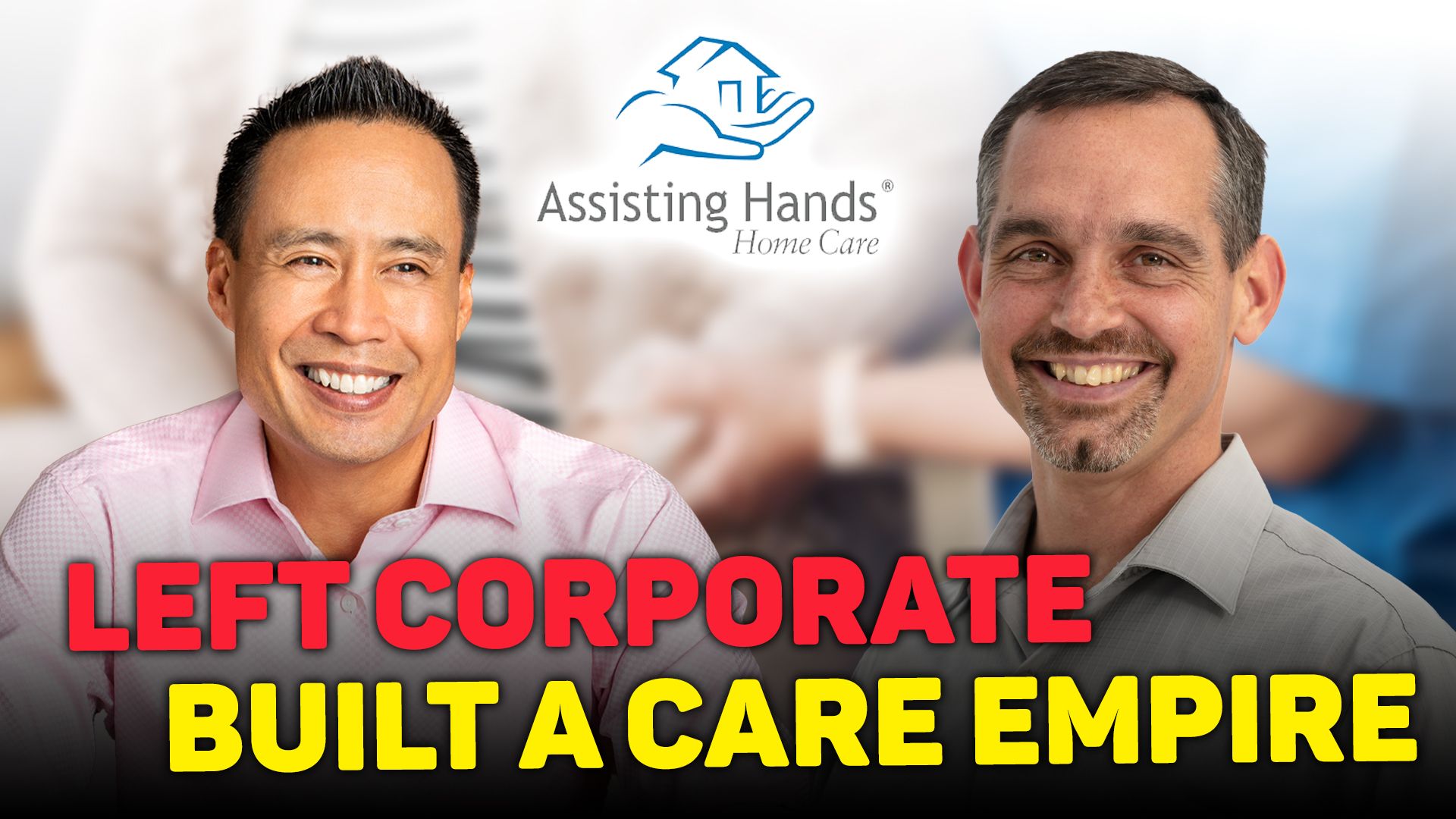
Alan Regala: Our next guest left a successful engineering career — not because he had to, but because something personal pointed him toward a different kind of work. He's now eight years into building his Assisting Hands Home Care franchise in the Boston area, and what he's building is worth paying attention to. Dave, welcome to the Franchise Champion Show.
Dave Tasto: Thanks for having me on.
Alan: I'm excited to have you. This is definitely a space I love and it's just growing every day. But before we get into the franchise business, tell us a bit about how you got into franchising and what your career looked like before that.
Dave: Sure. I'll try to keep it as short as possible. I had an amazing experience with some caregivers who helped my grandmother. But before that, my wife and I had always wanted to start a business of our own. After a couple of decades in corporate America — with one eye on doing something for ourselves and another on climbing the corporate ladder — we hadn't found something that really pulled our heartstrings or that we were truly passionate about.
That changed with the experience involving my grandmother. She moved in with my mom and stepdad, and they cared for her for a while. But as the disease progressed — she had dementia — it became harder and harder for them to care for her at home. Eventually, my grandmother moved into a community, and eventually into the memory care area of that community.
Towards the end, she needed support through hospice. And it was those hospice aides that blew my mom away. I grew up in Minnesota, and my mom would call me to share how these aides were going above and beyond — treating my grandmother with the respect and dignity she deserved, and making a very difficult time as manageable as possible.
My mom mentioned at one point that if she'd known caregivers like this existed, she could have kept her mom at home longer. That got me thinking about what was really out there — and about the growing need for this kind of care with the baby boomer generation.
What really tipped me toward this field was getting a chance to meet those caregivers during that hospice period. I went back out to Minnesota and met them at my grandmother's wake before the funeral. They shared stories about what they were doing — how they were going above and beyond, as my mom had said.
They painted her fingernails. They curled her hair. They did all this extra stuff on top of what's called the AM routine — basically getting someone showered, dressed, and ready for breakfast. That extra care meant so much to my mom.
One of the aides even shared a story about how her own grandmother was going through a similar situation with dementia. She ended up trading blouses between her grandmother and mine. She held the collar of her own shirt and told me that my grandmother was happy to be wearing her favorite new blouse.
I get goosebumps every time I share this story. It just goes to the fact that these folks really cared about what they did.
Alan: That sounds like an unusually high level of care and attention. Is that common in this industry?
Dave: There are so many folks in this field who are in it for the right reasons. They grew up caring for a family member during their teens or early 20s and just got drawn back into this field. I had an applicant come into our office once who said, "I just feel good making people smile." There are a lot of people out there providing that amazing level of care — you just have to find them.
Alan: So what happened after that experience?
Dave: On the airplane coming back from Minnesota, I just started thinking — how do we use our resources, our assets, and our experience? My wife and I had both gotten MBAs along the way. So I started researching different fields and industries, the way an engineer would.
My wife and I were driving in our neighborhood one day and saw a sign for a franchise show. She said, "If you're going to go into business, you've got to at least go to a franchise show." I remember looking at her and saying, "Well, wait — I'm leaving the corporate world so I don't have another boss." And now here I am, full tilt in a franchise system. But it was great advice.
I met some people there who knew a lot about franchising — people just like yourself, Alan. I also met some folks from Assisting Hands at that same show and started evaluating what it would look like to own an Assisting Hands Home Care franchise.
I also worked with a consultant who helped my wife and I get clear on our personal goals, our objectives, and where we still wanted to grow. That process opened our lens before we narrowed back in on what we were truly passionate about. And as I continued evaluating Assisting Hands, I knew my heart was pulling in that direction. I wanted to make a difference directly in people's lives.
Within weeks of resigning, I was down getting training and off to the races.
Alan: And eight years later, you still feel like you're in the honeymoon phase?
Dave: I'm excited as I was on day one.
What Is Assisting Hands Home Care?
Alan: Before we go any further, tell us exactly what Assisting Hands Home Care does.
Dave: We provide non-medical care for folks who want to age in place, live their retirement where they'd like to, or who need a bit of extra help after a surgery or a transition in life. Say something happens and someone ends up in the hospital — when they come back home and need support while doing rehab, we can help with daily tasks.
When I say non-medical, I don't mean our caregivers lack training. Our certified nursing assistants and certified home health aides are highly trained. But in our field, "medical care" refers to skilled nurses, LPNs, occupational therapists, and physical therapists. We fall into the non-medical category, helping with what we call ADLs — activities of daily living.
That includes bathing, dressing, feeding for those who need it, transfers in the home, help with walking around, taking clients to appointments, getting groceries — basically the things that help someone function week to week, day to day, where they want to be.
Alan: Tell us about this industry. I've heard some different statistics — how big is it, and how many people are entering this stage of life?
Dave: It's what they call the silver tsunami. I believe it's something like 10,000 seniors a day reaching the point where they start needing care or assistance at home. And we aren't even at the peak of the demand curve yet — we're still at the beginning.
What also drew me to this space is that it's where I'd want to be. I'd like to live my retirement as long as I possibly could in my own home. Nine out of ten people are looking to do the same.
Alan: My parents are in their 80s and we just moved them from a two-story house to a one-story. That's exactly where they want to be — not a facility. When the time comes, in-home care is going to be the answer for them.
Dave: That's exactly right. And that's a very common story.
Leaving the Corporate World
Alan: You had a senior director title in corporate America. Was leaving scary? Or were you so zoned in on what you wanted that you weren't thinking about that?
Dave: I did a lot of research and evaluated many options while I still had that senior director job. It was a well-thought-out decision. But in the end, it came down to what I felt was right. As analytical as I am — and my wife has a technical background too — it has to feel right. It's got to be in your heart. It's got to be something you're going to be passionate about.
All businesses have ups and downs. What powers you through is that passion and perseverance — that you really care about what you're doing and want to make a difference.
Alan: No regrets, no looking back. Head down and moving forward. What was that first year like?
Dave: Initially it was a lot of tasks. Coming out of the corporate world as a senior director in program management, I'd spent my days delegating and following up. I didn't always feel like I was accomplishing much. But in that first year, I could cross things off my list every single day.
Setting up business entities, getting a phone system in place, finding a payroll company, working through the franchise's list of recommended vendors — there are a lot of little things you have to be diligent about. But with a franchise, there's a recommended vendor list and a clear checklist to get through before you open.
And it was exciting. Choosing office furniture, thinking about what my space was going to look like — this was going to be my baby.
Not long after opening, I hired two full-time people for the office — one to run day-to-day operations and caregiver hiring, and one with a clinical background to help make sure we could take on cases and really do right by our clients.
As things got set up, I shifted my focus to marketing and building community relationships. I found myself delegating more into the second year. But I had to relearn how to delegate. It was my baby, and you have to build trust with the people you bring on.
Even today, I have a photo of my grandmother up on the office wall with the word "compassion" next to it. It's a reminder of what those caregivers did for her — and what turned me toward this field.
Building a Team and a Culture of Care
Alan: Finding and retaining good caregivers seems to be a real challenge in the home care industry. You came into this because of the caregivers who cared for your grandmother. How do you approach that?
Dave: Around the time I was starting this business, I came across Simon Sinek's TED Talk — the idea that people buy why you do what you do, not what you do. That really resonated.
So I start with sharing my why — even with new caregiver hires. They want to be part of something that makes a difference. And it all comes back to one question: are you treating your clients like you would treat your own family?
It sounds cliche. It sounds basic. But when other agencies in this industry get purchased by private equity firms and start focusing on different things than the care model — when you lose track of what really matters — things can go off the rails.
And treating your employees the way you'd want to be treated yourself is what retains them.
I once went to a conference and heard industry consultants share what their surveys found to be the key to success in this field. After all that research, the answer was: we just have to be nice.
Mind-boggling that it had to be said. But when you go above and beyond — when you're delighting your team, recognizing and rewarding them — you differentiate in your local market when other folks are just trying hard to be nice.
Alan: I heard the same thing at training for another franchise brand. Their three-word piece of wisdom on employee retention was "treat them well." Yours is better — you got it down to two.
Dave: The industry is local and connected. A lot of caregivers have friends in the field, and word spreads. If you take care of your team, they'll take care of you. Right now, our number one referral source is our own team.
Writing a Book During a Pandemic
Alan: You mentioned before we got on that you wrote a book during the pandemic. Tell us about that.
Dave: When we weren't able to get out and do marketing, I had a lot of time to think and research. I was noodling on what was going to define my office beyond the standards that Assisting Hands already has. What was our guiding principle going to be? And being an engineer, I wanted something measurable — because what gets measured gets managed.
After a lot of research, I landed on preventing hospitalizations. The Affordable Care Act penalizes hospitals for readmissions within 30 days. That metric flows downstream — to rehabs, to home health agencies, and to non-medical home care like us. Everybody in the chain has an incentive to keep people out of the hospital.
But I realized that even with the best caregiver working 9 to 5, if a client falls at 6 in the evening when a family member is covering, that person is still going to the hospital. So if we really wanted to tackle readmissions, we needed to work with family caregivers too.
In the US, family caregivers do the lion's share of caregiving. So I wrote a book for them. It's called Thriving at Home: A Handbook for Preventing Hospital Stays. It's written by a non-clinician, for non-clinicians — covering what families can do to help keep their loved ones out of the hospital. You don't need to be a registered nurse. You just need to know what to look out for and when to escalate.
The pandemic actually confirmed everything. A third of my clients went on pause when COVID hit. Some families tried to handle care on their own and eventually called us back. Others had loved ones go to the hospital for things that could have been prevented — blood sugar getting out of control when a call to the primary care doctor could have caught it first.
It confirmed that we had to work with family members. The book is our way of doing that.
Alan: How do you use the book today?
Dave: We give a copy to every family when we start care. I'm not trying to make money as an author — I'm trying to give back and help people live their retirement the way they want to. It's a gesture that shows families we're genuinely committed to keeping their loved one out of the hospital, and that we want to partner with them in that effort.
Only about one in five non-medical agencies even tracks readmission rates. So just by tracking, we're already differentiating. On top of that, we build care plans that address previous hospitalizations and offer what we call a Thriving at Home certification training for our aides to reinforce the skills that keep their clients healthy and at home.
Advice for the Corporate Professional Considering the Jump
Alan: What would you tell someone who's sitting where you were eight or ten years ago — someone in a secure corporate job, thinking about doing something else, but still a little uncertain?
Dave: Find something you're truly passionate about. Something you really care about.
There are always ups and downs in any business. But if it's more than just a job to you, that's going to keep you invested, committed, and carry you through the tough times — whether it's growing pains when you're busting at the seams, or a real setback like a pandemic. That was a setback. But passion and perseverance — that's what gets you through.
Where Grit Comes From
Alan: Last question. Being a franchise owner requires a certain amount of grit. Where did you develop yours?
Dave: It goes back a long way. I grew up on a farm in southwest Minnesota. When I was about eight, my parents went bankrupt off the family farm. We moved to another town. My mom started teaching while my dad went back to school to get into a different field.
Watching them reinvent themselves — seeing that passion and perseverance — that shaped how I think about grit. To me, grit is passion and perseverance. With those two things, you have what you need.
It was a tough time. Becoming a "city slicker," as they called it back then, was a big change. We moved somewhere we didn't have close family nearby, but where we could get back on our feet. And knowing that there's green grass wherever you look — that you can turn lemons into lemonade — that optimism is a big piece of it.
Alan: Growing up on a farm automatically checks the box for grit in my book. Farm plus bankruptcy? That's a couple notches higher. Watching your parents survive that and rebuild instills a lot into your character.
You mentioned trying to instill grit in your own kids — I'm working on the same thing. The challenge is that when you want to give your kids everything, you have to be intentional about letting them struggle. That's one reason I love sports. It's a place where they can be challenged, be allowed to fail, and develop that resilience without needing to go through a bankruptcy or grow up on a farm.
Dave: Lacrosse in college was a big part of that for me. The camaraderie, the tough games, the great wins. You learn that you can move on. Sports is a great analogy for all of it.
Alan: Well, Dave, thank you so much for joining me today and sharing your story. Congratulations on being a Franchise Champion.
Dave: Thank you very much, Alan.
Don't miss a beat!
We hate SPAM. We will never sell your information, for any reason.