Can Sports Fundraising Replace Your Corporate Salary?
Apr 28, 2026This is a transcript from Episode 35 of The Franchise Champion Show.
Listen to the full episode on Apple Podcasts, Spotify, or YouTube.
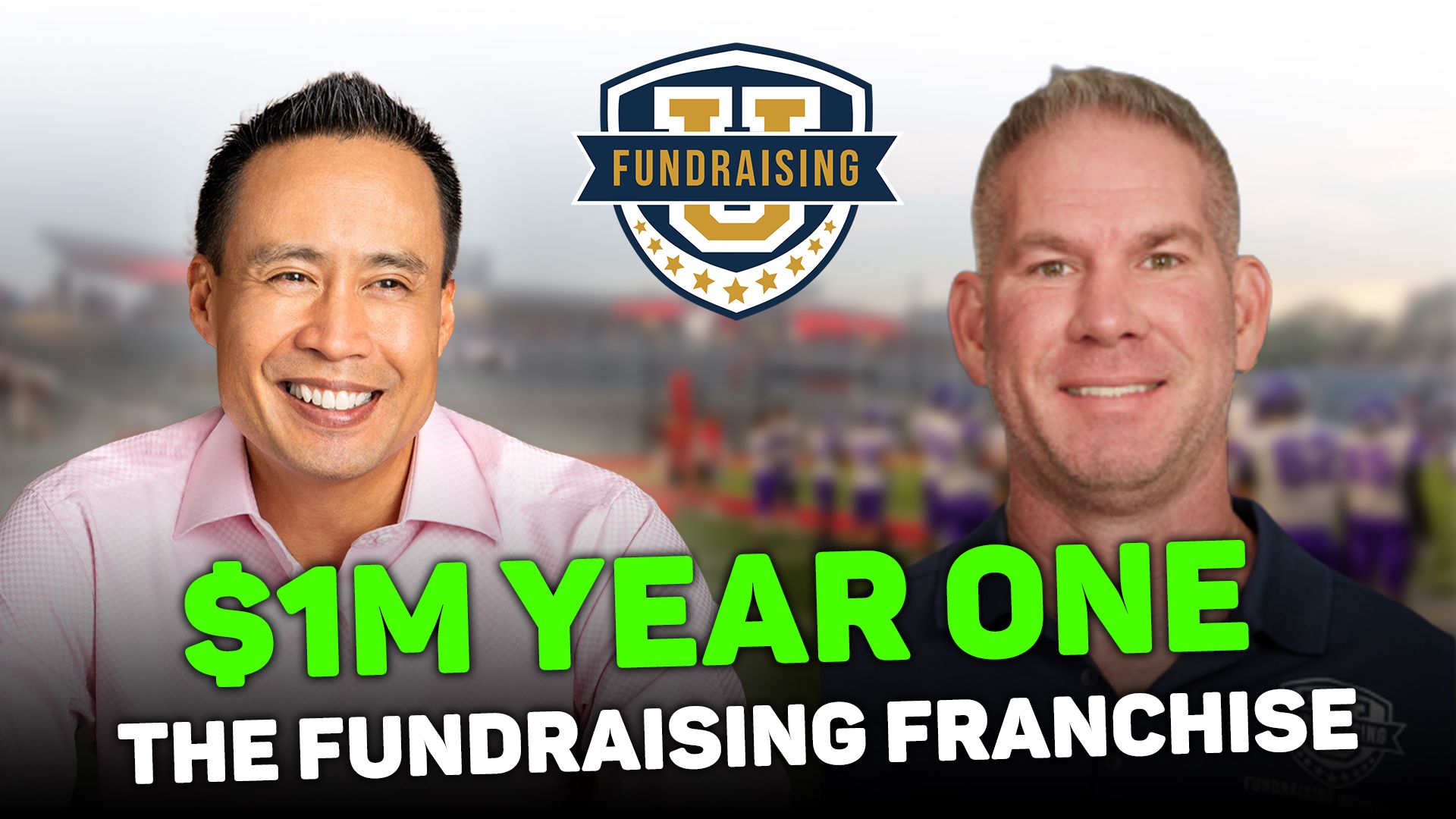
Alan Regala: My guest today is a former high school state championship coach and franchise veteran who brought all that expertise to a business that sits at the intersection of sports and entrepreneurship. He's now a multi-territory owner with Fundraising University, a fast-growing franchise helping schools and student athletes across the country raise more money in less time. And he's doing it at a seven-figure level across Mississippi and Louisiana. Stuart Miller, welcome to the Franchise Champion Show.
Stuart Miller: Hey, how are you doing?
Alan: I'm doing great. So glad you were able to join us today. Alright, take us back to the beginning. What was life like before Fundraising University? What was your background?
Stuart: Yeah, so I was an athlete. Baseball guy. And once my playing career was over, I went to college, knew I needed to get a degree. I always had an entrepreneurial spirit. I knew I wanted to own my own business, but I was also very active. I wanted to be in the fitness space or maybe the coaching space. I wasn't really sure, but I knew I wanted to own my own business. That's where I was.
Right out of college, my wife and I started a business, and she said, you know, you're really good with kids. You know the game. Why don't you get into coaching? And I thought, coaching? I never thought about coaching. But I did. I got into coaching, and I knew in about 30 seconds. Like, this is awesome. I love this. And the first couple of years, we had a lot of success. I won a state championship in my second year as a head coach. But coaching and teaching, there's a lot of time invested, and the pay just isn't there for somebody who wants to build something.
So I left coaching, bought into a fitness franchise, and I loved it. I learned a lot about business that they don't teach you in college. I learned what a franchise is and what it's not, and the advantages. I did that for a long time, and then we sold and I went back into coaching, because that's really where my passion was. A spot opened up, my wife was a principal at a school, and my kids went there. So it seemed like a good situation.
And again, I brought what I believe in, the way things should be run, and we started to have a lot of success at that school. But four years ago, I was at that point again where I loved coaching, but I wanted to make money. I have three girls, college coming up, all of that. So we were at that crossroad again, where it's like, I love doing this, but I'm not making it. I'm not making any money.
Alan: Yeah, exactly. That's a tough spot to be in.
Stuart: And so I was kind of at a crossroads. I don't know if people are religious or not, but literally, this is what happened. I sat in my office, I put my feet up, and I said, God, if this is where I'm supposed to be, I will make it work. But if there's something bigger, please give me a sign, because I'm struggling. And in about three or four seconds, my email dinged. And I was like, there's no way. Stuff just doesn't happen that fast. And I said, I better check that out.
I looked, and it was an email from Mike, the founder of Fundraising University. And the title of the email was, "Are you ready for a career change?" And I was like, there's no way. There's no way that just happened, Alan. And I said, it's what I asked for. So I better check it out.
I clicked on the email and it said, are you passionate about sports? Are you passionate about owning your own business? And I was like, yes. Yes, that's me. So I was on the phone with Mike in about ten minutes, and he explained what they do. He said, we run fundraisers for high school teams, and we have a specific system that makes it easier on coaches. We know the things that really work because we've been doing this for 20 years.
And I said, I don't even like running fundraisers for my own teams. Why would I want to do it for a living? And he said, no, you've got to experience it. So I went out to Arizona for a week, and it was just like deja vu. Like with coaching, I knew in 30 seconds. Wow, this is something big. I don't fully understand how big it is yet, but coming from coaching and from being a former franchisee, this was it. It put everything together, and it was already packaged and successful.
Alan: That's incredible. What a story.
Stuart: So that was four years ago. I came back to Louisiana, started operating one territory, grew that, purchased two more the next year. Now I'm coming up on four years and I have six territories across Louisiana and Mississippi. I have reps who work in their territories. I still run fundraisers myself. And the biggest thing is, I wake up every day excited about what I do. I'm not stuck behind a desk. I'm able to provide a nice living for my family. I'm still involved in sports and in business, and we're able to tie those two things together for people who want to be in that space.
Alan: That's awesome. Okay, let's unpack how this works. First of all, fundraising is a huge thing. You hit the nail on the head when you said you don't even like fundraising for your own kids. As a parent with kids in sports, nobody likes fundraising. It's a pain. So this is a real service you're providing to help schools and teams raise money, and to take the headache off the coaches and parents. Tell us about what types of schools and organizations you work with specifically.
Stuart: Yeah. So we have a specific system we use called the Blitz System. It's built mainly for high school athletic sports. The key dynamics that are part of our system are already present in sports. The planning, the organization, the accountability, the urgency. If you talk to any coach and ask, do you have planning in your space? They'll say, well, we plan everything. Everything is planned out from a practice plan to the drills we're going to run to where we're going to eat. Everything is organized.
Those dynamics that already exist in sports, we have in our fundraising system, and that's what we bring. So it's familiar when we start to install our system. We're a service-based company. We go to the schools and work with the coaches hand in hand. It's not like we just send the coach something and say, here's what you need to do. I'm behind a screen, you go do it. No. We go to the school and say, we're going to let you just coach. We're going to show you how to do this in fundraising.
We divide the team into smaller teams. Each assistant coach oversees a group. It's just like they're coaching their group for that week. And we say, these are the important things. This is what we need to say. This is how we create a sense of urgency. So we're coaching the coaches on the things we know work.
Too many times, coaches just want to coach. So they say, I'll let my parents and booster club handle the fundraising. But those folks have jobs too. It becomes, hey, I saw this idea, let's try this, let's try that. It takes volunteers, it takes people showing up, someone to organize it, someone to count the money. There are a lot of moving parts.
What we do is, we're the lead on it. It's us, the team, the coaches, and the players. The parents can help, but they play a different role. And our fundraisers only go one week. We can raise $500, $600, $700 or more per player in just one week. It's not a long, spread-out thing. We have the technology figured out where everything is trackable, which is huge for schools because there has to be a record of everything.
We come in, work with the coach about three or four hours total, we're there in person, we lead the fundraiser for that week, and that's it. Then we bring them a check seven to ten days later. The fundraiser goes, the coach gets the check, players go play, coaches go coach, and parents cheer them on. The coaches just go buy what they want.
Alan: That's awesome. I mean, I know firsthand how challenging that whole thing is. And it's really cool how you align it with coaching. Coaching is a process. So is fundraising. Why not align them together? You were just telling me before we started about what you're doing today. Tell us about that.
Stuart: Yeah. So today we're kicking off a 100-person football team at a school we run a lot of fundraisers with. Their baseball team played in the state championship last year at the 5A level. That's the highest level in Louisiana. They have about 36 or 37 players, and we raised $36,000 for them this year. So they now have a four or five camera system all around the field where a pitcher can come off the mound, go to an iPad, and see exactly where he missed on a location. Or a hitter can come out of the box and say, where did he get me out?
And the powerlifting team we worked with, the boys and girls powerlifting team in December, their girls just won the Louisiana state championship. But what the fundraising did for them was give them the nutrition to keep their athletes healthy. Between the boys and girls, they probably have 70 lifters. We helped raise around $45,000 for them. They had the high-tech lifting suits, and they were able to purchase more equipment for the weight room so more people could lift at a time.
That's where this money is being spent. And listen, you give coaches a blank check, they're going to spend it. They can always find things to spend on. But the problem is coaches have always been expected to win on a budget. Hey, we want you to win, but we're only giving you this money. And coaches get frustrated. How am I supposed to do this with this amount?
So then they do a fundraiser for this, and it doesn't go well because they're not fundraising experts. Then they need to run another one next month. And the parents are like, really, again? What we do is say, let's run one fundraiser for one week. Everybody's all in, and we're going to get you all the money you need. We have a sense of urgency for that one week. We make a ton of money, and then coaches can go coach and buy what they need. We're not playing this game where you need something, so let's run another fundraiser.
Because that exhausts the community. What we've discovered is if you run one and you run it the right way with everybody all in, you're going to make a lot more money in that one week than you would over running three or four. And the community doesn't get exhausted. So the next time another team runs one, maybe two months from now, they benefit because it's not one long fundraiser right behind another.
Alan: Yeah, yeah. It's very efficient. I love it. And I assume you run this at the beginning of the season or just before?
Stuart: This is part of the strategy. It's really important that you run fundraisers at the right time of year. Typically the best time is after a team has been picked and before their first game or first match. Because one, the coaches are seeing the players every day, so there's that accountability factor. Two, the parents and supporters are ready for the season to begin and the excitement is there, so they're going to give more. And once the season starts, we don't run any fundraisers during the season at all. That's how we space things out.
So here in Louisiana, baseball starts in January. We may run baseball in January, then come back with softball in the middle of February because they start later. Now you've got six weeks where no one was asked for anything, and then track comes at the end of March. We're able to space it out where we're not bumping into seasons, and we run at the right time when the community is ready to watch these athletes play. You really maximize the excitement of that time of year.
We work with thousands of teams across the country in 44 different states, and we have that data. Over the last 20 years, Mike and the people in leadership have been doing this and they know what works. That's what we do on a weekly basis. What's working? Let's just do this. And then we continue to get really good at it.
Alan: Makes sense. Tell me about how your system really empowers the student athletes to be the ones putting in the effort, rather than the parents doing all the work. That's been my experience with fundraising. The kid comes home, says I need to do this, and it ends up being the parents doing most of the work.
Stuart: Yeah. So we know that when kids are held accountable by the coaching staff, a standard is set and they're going to perform better. It's just like if you're going to be on a football team, you have to make so many summer workouts or you're not on the team. You have to maintain a certain GPA or you can't play. You have to learn the playbook. You have to know your responsibilities. Teams have all these standards for their athletes.
What we do is come in and say, here's the expectation for each player. We coach the head coach at the kickoff on what to say, so the coach sets the expectation. Then part of our system is accountability checkpoints along the way, where five minutes at practice the coach says, all right, get in your groups. Let me check your progress. With our software, they can see everything the player is doing or not doing. It's like if a player is missing practice or missing workouts, the coach goes and has that conversation.
We just bring that same methodology to fundraising. If the expectation for the player is to do X, Y, and Z and they're not doing it, the coach goes and says, hey, we've been running this for two days and you haven't done anything. The coach sets the expectation and holds the player to it. If you want to be part of this team, this is what you have to do.
When that's not present, what happens is the coach says, go home and sell these raffle tickets and bring me the money whenever you're ready. And they're going to go to their parents and say, hey, can you hop on Facebook and sell these for me? And if the coach never checks on it, nothing is holding the kids accountable.
When it's at the team level, it takes the stress off the parents because the coaches are holding the kids accountable for the expectations. The fundraising becomes part of the team activity, not something extra. And once you can change the coach's mindset about that, we have teams that make $100,000 in a week. We have teams that make $125,000 in a week. But too many coaches say, I don't want to deal with it, I'll let the parents handle it. Well, then they have no control over their money.
Alan: I love that. That's so cool.
[Quick break: Stuart was looking for something that would give him purpose and create financial freedom. That's the kind of match I make for others looking for a career change, at no cost to you. Schedule a call with me at athletetoowner.com/ready.]
Alan: So let's change gears and talk about your role as the franchise owner. You're coming up on year four. Tell us what that first year was like, and then we'll talk about where you are now.
Stuart: Yeah. So my first year I had one territory. Each territory is 50,000 students. That first year you're really learning how the business works, learning the cycle of fundraising. Because we work all year long. Teams need money all year long.
I didn't hire a speech coach, but after my first year, I did invest several thousand dollars and hundreds of hours practicing, because I knew what we had was special. But if I can't communicate it to coaches and teams, it's not going to work.
You start to see what works and what doesn't work in that first year. The second year is really where the magic happens, because 90 to 95% of the teams we work with in the first year sign up to do it again. So you really build a solid business in year one, and the more you hustle, the better that's going to be.
And then in year two, it's about how do I get those existing teams to perform better, and how do I fill in the gaps with new teams. You'll have some teams that want to wait and see. They've heard you say some big numbers, but they've never seen it. They don't want to jump in and be the first one in case it doesn't work out. In that second year, once you've proven you're there for them, you can produce the numbers, that's when the larger teams come on board. They know they're going to make a lot of money.
So that first year is really about building externally, building my business through my territory, while internally getting better, being coachable, and recognizing what I need to improve.
Alan: That's awesome. So you're building the foundation that first year, learning and figuring things out both externally and internally. Getting your foot in the door with the teams willing to work with you while the others wait on the sidelines.
And I love that about the recurring revenue. Everyone who's interested in business ownership would love to have repeat business so they're not constantly chasing new leads. And it sounds like you've got 90 to 95% of people coming back the following year.
Stuart: That's right. And company-wide, we're around 85%, which is still, think about it, 85% of your customers are going to come back. You don't have to go look for 100% new customers every year.
Too many times in business it's, I'm going to sell you something, now I've got to go find someone else to sell to. With this, you become a valuable part of not only the team, but the school. Because you're raising so much more money in a way that's safe and organized, and administration is always concerned about safety. So you become a valuable part of the school. Year after year it just grows and grows.
And when you're having teams resign at a 90 to 95% rate, it's, how do I get those teams better? How do I fill in the gaps? I'm not spending all my time going out looking for new customers.
Alan: That's amazing. What does the range of opportunity look like for a given school? Like if you think about all the different teams and organizations?
Stuart: Yeah. At any given school, let's take a regular decent-sized school in Louisiana. We have schools ranging from 300 kids to 3,500 kids. Let's say a school with 1,200 kids. There's probably going to be around 20 to 25 different organizations, whether it's a competition team, an academic organization, band, ROTC, Beta Club, and then all your sports teams. Football, basketball, baseball, softball, soccer, lacrosse, wrestling, powerlifting. We have a lot of powerlifting here in Louisiana. And here's the thing. They all play in a season where they need equipment, and a lot of them go to summer camps where they're going to Texas A&M or LSU for a team camp. Well, now they need money for that too.
So not only is the season paid for, but their offseason development is paid for in two fundraisers, one week each.
Alan: Let's talk about that first team you ever signed.
Stuart: Yeah. My very first group, I went to the football coach and athletic director to try and hit a home run right off the bat. And he said, Stuart, I've been with my guy a long time. I'm going to stick with him. And I said, alright, I appreciate your time. Are there any other teams on campus that need money? And he walked me down to the girls basketball coach and the wrestling coach.
I told him, I just need one team on campus to prove that we can outperform what you're doing. So I ran with the girls basketball coach. We ran a fundraiser, paid for their season, and when I brought her the check, I asked, is there anything you've ever wanted to do for your players that you've never been able to do?
And she said, you know, Stuart, we play in the toughest girls basketball district in the state. Our two biggest competitors always go to a college summer development camp. My kids just can't afford that. I can't ask my parents for it. And I said, all right, coach, here's what we do. You play this season. You figure out how much that camp is going to cost and when you want to go, and we'll take care of it.
February came around, their season ended. I went and talked to her. She said, we want to go to this camp. It's going to cost $5,000, room and board, everything. I said, alright. So we set up a one-week fundraiser in May, and we paid for the whole trip. I brought her a check for $5,048.
She couldn't believe it. And I'm not saying it was because of this, but the next season they beat both of those teams in district, and they went the furthest they've ever gone. But as a coach, I'm thinking, now my players don't think they're at a disadvantage. Maybe the skills didn't improve, but they had the same opportunity as the two teams that always beat them. And psychologically, that girls basketball team felt they were on the same level because they had the same opportunities.
And that's one of the biggest reasons we do what we do. There are thousands of coaches in America who want to give their kids the moon, but they're handcuffed with a budget. We can make those dreams a reality.
Alan: That's so awesome. What a purposeful business, helping coaches and ultimately the players be able to compete and grow. Okay, let's fast forward. What did your last year look like? Talk about your role and your team.
Stuart: Yeah. I'll talk about numbers. Listen, I'm just a coach who was walking the gym floor and the baseball diamond four years ago. I'm not anybody special. But athletes and coaches, we have a tremendous work ethic. We're determined, we're coachable, and we know how to follow a system. Just tell me what to do and we're going to do it. That was my mindset going into this.
The biggest thing was being coachable. I went into this and said, I don't know anything about this. They're the experts. Teach me everything. And my first year, I did $1 million, right over $1 million in gross sales. My very first year.
I really didn't even know I was there. I was just working. And then you look up and you're like, wow, okay. I didn't know we were there. I'm just working, signing up teams, working hard for the teams, working hard for my family. And you look up in November and you're like, that's pretty good.
After that first year, coaches start talking. I started getting calls and texts from coaches around the state saying, hey, can you come down here and do this for us? Being a franchise, I had to buy those territories, which I was totally fine with because the demand was already there. What we do is repeatable. I could teach it to other reps.
Alan: So you grew from one territory to six. How does that expansion actually work?
Stuart: You're basically just paying for the territory. I didn't have to invest $600,000 building a whole new facility or buying hundreds of thousands of dollars in equipment. It's, buy the territory, find the rep, and train them to run our system. Just like that.
So I bought two more territories in Louisiana, hired a rep. My second year, my fundraisers got better. The rep started about halfway through the year, and we did $1.6 million. Then I purchased the rest of Louisiana and Mississippi and hired another rep who did about six months. Now this is his first full year. And we'll do over $2 million between myself and two reps who came in within the last six months, in three territories. I still have three territories where I just hired another guy who's getting out of coaching, just had a baby, and coaching just takes too much time.
There's no buildout. There's no ten-year lease. There's no approval from the city inspector. None of that. Here's the system, here's the territory, buy it, either you do it or hire a rep to do it. We basically know which type of people will succeed in this, so those are the people we try to hire.
Alan: That's incredible. And when we look at scaling, you're essentially just buying zip codes. You're not creating a store, you're not buying a bunch of vehicles and equipment. You apply the process, train the person in that area, and it grows.
Stuart: Exactly. And it's not cyclical. We know where our customers are. We know they need what we offer and there's no shortage of them. Once you do a good job for one team, other coaches ask, you raised how much in a week? Can you come do that for us? That's how this business grows.
Alan: Now, we've got people out there in the corporate world, some coaches, some not, who are just looking for a career change. Do you have to be a coach to be a good owner of a Fundraising University franchise?
Stuart: No. I would say right now, about 50% of the people in our organization came from the corporate world. For whatever reason, they were sitting behind a desk somewhere on a clock and said, this is not what I want to do. This is not for me.
The guy I just hired, he said, what am I going to do? He was a teacher and coach and said, I could spend $5,000 and get another degree for a $300 pay raise. The numbers don't add up. So this is for anyone who enjoys being in the community, enjoys helping people, enjoys being around sports, and wants to control their level of income. If you want control over that, we have an environment that's fast-paced. You're going to schools, talking to coaches, interacting with coaches and kids. You're in gyms and weight rooms.
And you're creating such an impact on these programs. Think about if you played sports when you were young. There are probably a couple of things you remember that really made you love sports. Traveling somewhere, being part of a team. I'll never forget at nine years old, our baseball team traveled to Florida to go play. I thought I had made it to the major leagues.
We have stories after stories. There's a team called Ringgold Basketball. Very small school. One blinking light going through the town. Mostly log trucks going through. And sometimes people get into this thinking, that school doesn't have any money, I'm not going to go over there. But every team needs what we have.
This team had committed to go play in the Smoothie King Center in New Orleans. They're four hours away. They committed, but they had no idea how they were going to get there. So we ran a fundraiser for them. We raised about $10,000 in a community that had never raised more than $800. They were able to take the boys and girls teams down for the state weekend in New Orleans. Those kids had probably never left Ringgold, much less North Louisiana.
There's probably one kid from that team that may go play at the next level. But those kids will talk about that trip forever. And we're able to help coaches provide those types of opportunities all over the country.
I'm able to lay my head down at night and say, I was able to make some money and support my family doing something that matters, creating an impact. I'm not out here selling stuff I don't believe in. Mike has created an opportunity where you can do both. You can really love what you do, create a positive impact on a team and a community, and make a pretty good living at it. And if you want to grow it, the opportunity is there because it's the same system whether you're in North Louisiana or in Seattle, Washington. Coaches are coaches. Teams are teams. The dynamics of sports exist everywhere.
Alan: This has been great. I want you to leave us with one thing. What's one bit of advice you'd give to anyone out there considering a career change and thinking about franchising?
Stuart: There's no waffling. There's no back and forth. If you even think, well, I've got a safety net over here if it doesn't work out, that's already the wrong mindset. Because if you're spending time and energy looking at your safety net, you're not spending 100% of your energy on what you need to do to be successful. When you go, you've got to go all in.
One of my quarterbacks a couple of years ago, I gave him the task of meeting with the team and coming up with a motto. I didn't know what this meant at the time, but he said, every time we break out, we say, ten toes down. I said, ten toes? What does that even mean? He said, Coach, we're all in. We've got ten toes dug into the ground and we're not leaving. We're not going anywhere.
And so if you're going to do this, you've got to go ten toes down. You've got to be all in. And not only be all in, but be willing to be coachable. When you go into a franchise, they already have a repeatable system that works. That doesn't mean you don't have to work. They're going to show you what works, but you have to go do the work. And they're going to save you a lot of mistakes. They're going to save you 80% of the mistakes and probably a ton of wasted money.
So be coachable and go all in. If you're always looking for a plan B, there is no plan B. It's plan A. The people who are way more successful than I could ever imagine to be, that's what I've learned from them. There's no plan B. I'm all in. I'm going to be super successful or I'm going to crash and burn. But I'm going all in either way.
Alan: I love it. Burn the boats. Burn the boats.
Stuart: That was our baseball team's motto. And you know, all these clichés we take from sports, we can apply in business too, Alan. You've probably talked to a ton of super successful people and it's the same thing over and over. I'm going all in. I'm learning as much as I can. I'm going to outwork everybody. I'm going to show up every single day and follow the plan. Whatever happens, happens. But I'm going all in.
Alan: Absolutely. That's the whole theme of my business, Athlete to Owner. Taking the principles of high-performance training, the things you learn when you're competing and trying to improve, and applying them in business. Purpose, discipline, coachability, creative problem solving, accountability, grit, empathy, communication. These are all things we learn in sports and on teams. And now you get to apply those same things in business. It's a recipe for success.
Stuart: And listen, Mike, we have a mental performance coach on staff that we meet with every Friday. I don't know how many other businesses have a mental performance coach. We're a collection of coaches and teachers, and we know how much that stuff means to athletes in competition. But we're also in competition ourselves. We may be competing with another fundraising company, we're always competing with ourselves. So we learn the same things.
We work with Brogan, and she works on the same principles. She's a UFC fighter, so nobody talks back to her. But it's the same things we're teaching the athletes. How to handle pressure. How to schedule your week and be more productive. How to handle failure. Mike sees the value in that. We meet every Friday and go over those lessons. And if you're an athlete, you're familiar with those concepts.
Alan: That is very unique. I have not heard of another franchise organization with a mental performance coach. And that is valuable. Anyone who's had coaching before knows the mental game is about 80% of it. Well, kudos to Mike for putting that in place, and kudos to you for taking advantage of it and for all the amazing work you've done and the business you've built. I really appreciate you sharing your wisdom with us. Thanks for being on the show, and congrats on being a Franchise Champion, Stuart.
Stuart: Thank you, Alan. Anytime. I'm always excited to talk about what we do. Your enthusiasm and passion for what you do really comes through. And that's what business is all about. Finding something you love, that you can contribute to, and have an impact on the people you serve. And also make a great living, have it be in alignment with who you are and what you're trying to achieve, and have an impact on the world.
Alan: There we go. Thanks, Stuart.
Stuart: Thanks, Alan.
Don't miss a beat!
We hate SPAM. We will never sell your information, for any reason.