Can Biohazard Cleanup Be Your Next Business?
Apr 14, 2026This is a transcript from Episode 33 of The Franchise Champion Show. Listen to the full episode on Apple Podcasts, Spotify, or YouTube.
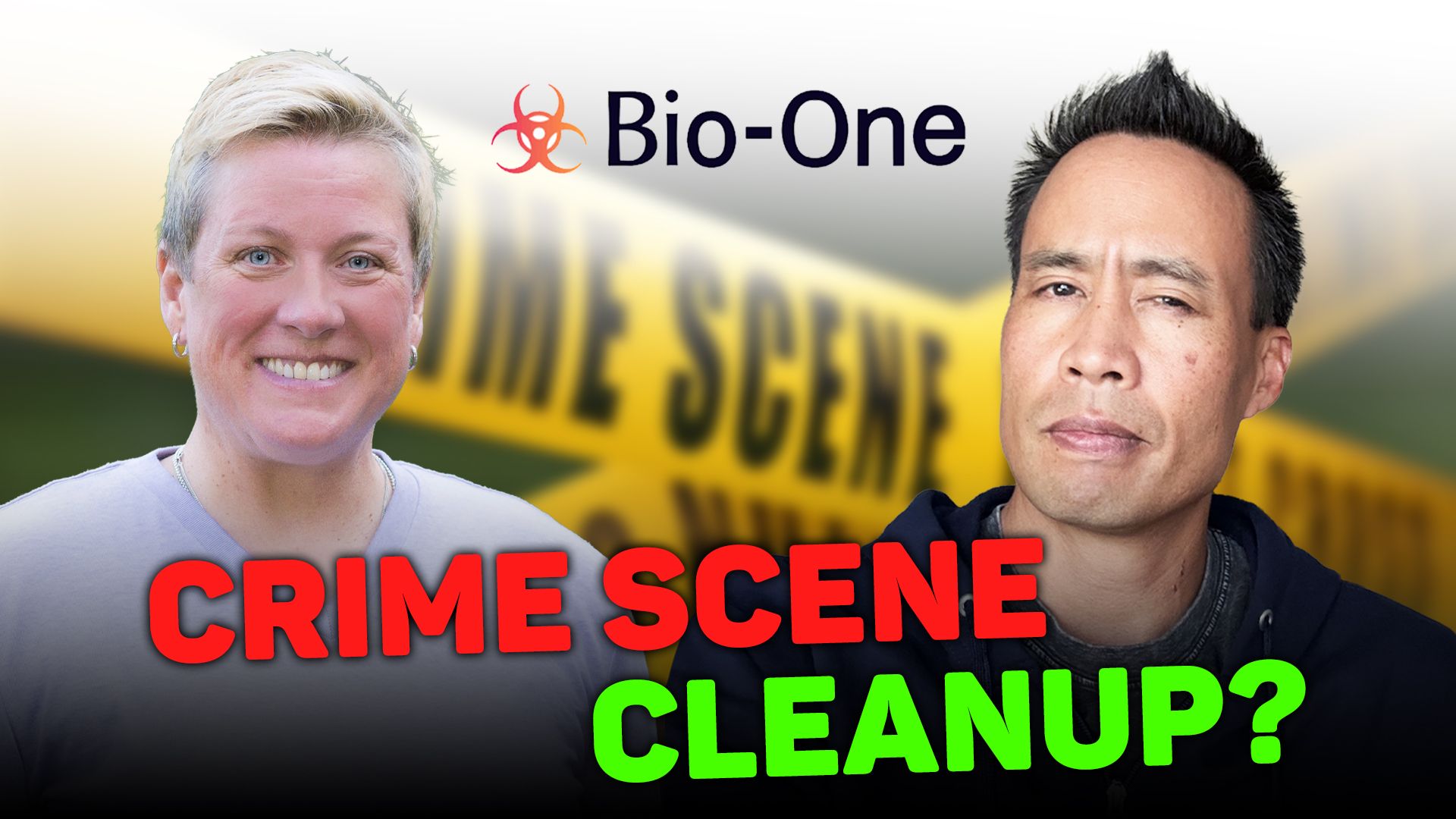
Alan: My guest today spent 22 years in law enforcement, retiring as a police captain in 2022. Two years later, she opened a Bio One franchise with her sister-in-law in Annapolis, Maryland. Let's just say it's not your typical business, and most people wouldn't last five minutes on the job. But for Cindy, it's a perfect fit. You'll understand why the moment she tells you what they do. Cindy Thompson, welcome to the Franchise Champion Show.
Cindy: Thank you. I'm so glad to be here. I love talking about what I do. Which is unusual.
Alan: What you do is very unusual, and I'm very excited to have you on the show. We were just talking for a bit, and I mentioned that it's been a number of years I've known about the franchise but really never spoken to anyone there. It's just so different than anything else I've dealt with. But to get us started, tell me a bit about your career in law enforcement. What did that 22-year journey look like for you?
Cindy: It was a great journey. I picked the best profession and went to college. I made a pact with my parents that in order to be a police officer, they wanted me to go to college first to make sure that's really what I wanted to do. So I went to college, got an undergraduate degree in interdisciplinary studies with a concentration in criminal justice. And yeah, I wanted to be a police officer. So as soon as I graduated, I started putting out applications. I got hired by Prince George's County, which is a pretty large county. Little shy of a million people, right outside of Washington, D.C. It has a plethora of crime, from murder to theft, a wide range. So my career was very expansive.
I did patrol for seven and a half years. Then I went on to become a detective. Then I joined a task force. Then I became a sergeant, went back on the street, went to Internal Affairs, went back to the street, got promoted to lieutenant, was a shift commander. I was also commander of the narcotics enforcement division for two years. Went back to the street as a lieutenant in a different district. I worked three out of six districts when I was there, so I kind of got around the county and got to know new people and learn new things. Then I got promoted to captain and was an assistant commander of one of the busiest districts in Prince George's County, which was Hyattsville. And I retired as a captain from Hyattsville. My career went full circle.
Alan: Wow. That's amazing. So what's interesting to me is that you knew before you went to college that you wanted to be a police officer. How did that happen?
Cindy: Right after high school, I knew I did not want to be a secretary. I did not want to sit in an office. I didn't want to dress up. I didn't want to work nine to five. I always liked adrenaline and action. I started playing sports at a very young age. At six years old, I told my parents I wanted to play soccer. There was no girls' soccer team, so I had to join the boys' soccer team. And I was the only female there for two years. At six years old.
And from there, I just loved it. I loved learning. I loved the discipline of it, the training, the focus. I just kind of played sports and was a tomboy. Admittedly, I was a tomboy. I liked boy things a lot. Sports and trucks and excitement, not dresses and Barbie dolls growing up.
So it was the perfect fit. I was out jogging, getting ready for soccer season, and I see this female patrol officer just drive past me. And I'm like, you know what? That would be a career I'd be really interested in. So I really started researching it, did ride-alongs. It was either military or police. I think I was just structured for that. I liked the structure, the discipline, the drive that they give you, the uniform. Everything that comes with it just appealed to me.
Alan: That's really cool. One, that you knew so early what was attractive to you as far as a profession. And I think for most people at that age, you have no idea. So for you to have more than an inkling, a very concrete idea of what you want to do, it's pretty amazing.
Cindy: Yeah. And it was the best career. I'll always say that. It went by so fast. Every once in a while I have to say, oh my God, I'm retired. Like, I already did a career. It's crazy to me because it just literally flew by.
Alan: That is amazing. Well, thank you for your service, before I forget. That's fantastic. So you had an amazing career. What made you decide it was time to retire?
Cindy: I think the atmosphere started to change in the police department. The politics, I would say. And the fact that my daughter was still young. She was nine when I retired, and I wanted to spend more time with her. Because as a police officer, there's no off days really, especially as a commander. We have to answer our phones 24/7. We have to respond whenever we're needed. Being a captain for four and a half years, that was my lifestyle. Focused on work, focused on my career.
And I said, you know what, I did my numbers and I had 22 years. Thank God nothing seriously happened to me on the job and that I was able to retire healthy, young enough to spend time with my daughter and to do something else for the next 20 or 25 years of my life. Cops never think about that. When I became a police officer, I was like, this is my career. This is going to be it. I never thought I'd have to do a second career, that I was going to be young enough for a second career. Being retired at 48, that's just way too young. You can't just sit around and not do anything. I couldn't, anyway.
Alan: Yeah, you've got to stay busy. So how did Bio One come onto your radar?
Cindy: I have to give all the credit to Nina Thompson, my business partner. She was looking to get into a franchise. Her and my brother have three girls, and they wanted something to solidify their future, to have an income, to support their girls going through college. So she started really researching franchises. Of course it was like Crumbl Cookie, staging houses for real estate. And then the business coach was like, "I know you probably are not going to like this, but have you ever heard of Bio One?" And Nina was like, no, I've never heard of Bio One. And he goes, "Let me just tell you a little bit about it." And he goes into it: "It's crime scene cleaning." And she was like, wait.
My sister-in-law is retired law enforcement. We would talk about crime scenes all the time because I would come home from work and say, hey, this is what happened today. This person did this, this person got killed here. We would talk about crime scenes, but I never knew coming up in the police department who cleaned them. We never gave out that information. We went and dealt with the crime and the investigation afterwards, but never knew who went in and got people's houses back to the way they should be. So I was like, tell me more, tell me more.
So we went over the numbers, did a bunch of research, and I said, I think this is exactly what we should do. I think it's the perfect transition from police work into this because it's a different part. We deal with crimes, but on a different level. And I still get the excitement factor. My phone will ring and it'll be a murder or suicide, and that kind of adrenaline you get when you're on the street still comes because we don't know what we're walking into. So it was exciting for me from that perspective. The hoarding part, I had to get a little used to.
Alan: Okay, let's take a step back. We've got Bio One, crime scene cleanup, murders and suicides and all those crazy things. And then the other part is hoarding. Tell me about that.
Cindy: Hoarding. We do hoarding, gross filth, rodent droppings, things in people's homes that a regular cleaner will not do. They will not touch. They're like, mouse droppings? No, we're out. So that's when they call us. I would say hoarding is probably 80% of our business and then 20% crime scenes. So hoarding kind of keeps us afloat in between the calls for crime scenes.
Alan: Wow. Okay. Both of these things, like I said, most people might not be up for. So I think it's a very special business for people with certain backgrounds, and yours clearly seems perfect for this. Let's start with the hoarding side of things. Can you walk us through the process? Someone calls you for this type of job. What does that look like as an owner?
Cindy: For an owner who's in a hoarding situation, calling us takes a lot of courage. A lot of times they don't want to make that call. They're embarrassed. They've shut their family out. They don't want anybody to see what they've created inside their home. So Nina will field the calls. She's super compassionate. And obviously, we don't judge anybody for the situation they're in.
When someone calls, a lot of times they'll say, "My house is a little messy." They don't tell us that every bedroom is hoarded from floor to ceiling. They never lead off like that. It's, you know, I might have a little bit of a hoard or a little bit of a dirty house. Then Nina sends me out, and I go knock on the door and I'm like, oh my God, yeah, you do have a little bit of a mess in here.
I have to take the shock factor out of my face when I'm dealing with the homeowner. I have to say before I roll up on this house, this is going to be bad. I have to get it out of my system, because more often than not, it's worse than what the person says. I don't think anyone's ever given us an accurate description of a hoarded house unless it's coming from the county or a family member. A lot of times parents will pass away, the children will call us and say, I don't want anything to do with this house. And we go and clean it out for them.
It takes a lot of courage for people to call. They don't really address that they have a problem. Hoarding is definitely a mental health issue, and we don't really focus on the mental part of it. We're there to get their house back to the way it should be. With hoarding comes trash, always insects, most of the time mouse droppings. There's always going to be biohazard. Whether it's from the homeowner or from an animal or critter that's gotten in the house, we know we're going to deal with bio at every hoard we go to. I definitely had to get used to that.
Alan: Yeah, I'm sure anyone would.
Cindy: Yeah. As a police officer, I would go to a hoarded house but not be there very long. If I had to call social services, I could, but I didn't have to touch or clean anything. Now I'm definitely getting down into it.
Alan: So you've gone to the house, spoken with the homeowner. What happens from there? Are you doing the work right away or coming back?
Cindy: No, I'll go out, look at the structure of the house, or if it's a garage or whatever it is. I'll take pictures, get the square footage, note whatever biohazard I see. But the bio is always under stuff. We don't get to it right away. It's usually when we start getting down into it that we're like, okay, yeah, this is where it is.
I take it back and give all the information to Nina. She plugs it into the system, and then we give them an estimate. We email or call them and say, this is how much it's going to be for this job, this is what we need to bring. And once they sign or authorize us, we schedule them on the calendar. We're usually out pretty quick.
Alan: And who's going out and actually doing the cleanup?
Cindy: We're such a new and small business that for now I'm the number one employee. Nina does the business side, and I wanted to keep her there. That's what she went to school for and that's what she's awesome at. But I have had to have her come out on some of these jobs with me, which really wasn't our agreement at first. But she's such a trooper and such a team player that we've gone out and done jobs and we can't believe we're doing this. We look at each other and say, we did this. We show the family the before and after pictures, and they're like, you did that? And Nina and I are like, yeah, we did.
So it's usually me, then we have one guy who's a family friend who helps out, and we'll get day laborers from a construction company we've partnered with. If a house is fully hoarded, it'll be like a four or five day job and we'll get day laborers for each day we're out there. The crime scenes, it's just my brother and I. We're the only ones trained to do it, who have the stomach for it. I didn't know my brother could do it at first. I kind of threw him into the fire on our first job.
You know, I've seen shocking things my whole career. So it's not really shocking to me. But I never really thought about whether Jeff was going to be okay with it. So we went out, and the first job we did was an alcoholic who fell and cut his head open and decided to go to bed, and basically bled out for hours and hours. He actually didn't die. We don't always do death scenes. It can be a tragic injury where there's significant blood on the scene. I said, all right Jeff, here, put your suit on, let's go. We did it, and he did a great job. And he's been with me for every one since then.
Alan: Wow. That's so crazy. Well, it's good that some of them aren't always deaths, I guess. Okay, so on the crime scene side of the business, how does that typically work? Who's calling you?
Cindy: We have a great partnership with Crisis Response, which is a civilian and sworn section of the police department. We're in Anne Arundel County. That's Annapolis, our home base. Anne Arundel County and Annapolis police have awesome crisis response teams. We've gotten to know them. They know I'm former law enforcement. So they've been a really good ally for us. They know that when they call Bio One of Annapolis, we're going to come out, I'm going to have the compassion, I'm a former police officer, I'm going to know how to handle the situation, the tragedy, the trauma, and the follow-up.
We always follow up after a traumatic cleanup. I'm always reaching out the next day. Are you guys okay? Do you need anything? Nina and I stay with our customers and clients for however long it takes. Because we know that nobody wants to be in that situation, that traumatic event. And once the police leave and everybody leaves, a lot of times they have questions. Crisis response sometimes will call us. It's usually a family member or a friend of the victim. They can Google us or find us through word of mouth. A lot of the fire departments know us. A lot of the police departments know us.
My former agency, Prince George's County, called us last January to clean the boats after the plane crash in the Potomac. The commander of the marine unit didn't want her officers to have to clean that after spending all night doing recovery. There were no survivors, so it was all a recovery mission. They were out there all night in the Potomac. So my brother and I and the family friend I mentioned, Jay, we went out and cleaned the boats. We kind of got known for that. It was a big moment for us in terms of showing we're here for law enforcement just as much as we're here for civilians.
Another great job we got was MGM. They had a murder in the food court at MGM National Harbor, and my brother and I went out and cleaned that up for them. We come out, we know what we're doing, we're professional. That's why people are calling us. It's a trust factor. They feel comfortable with us. We don't price gouge people like some of these huge companies that dabble in this a little bit. They just want to do a little bit of everything, and they just don't bring the compassion, the caring, and the afterthought of the situation like we do. And that's what we want to be known for.
Alan: Yeah, that's great. This is such a needed service. But I think the general public doesn't really know you exist.
Cindy: They don't. And it's so hard because I'm not really selling anything. I can't go door to door and be like, "Hey, are you going to have a suicide this week? Or are you going to hoard your house next week?" We can't do those kinds of things. We have to be clever about how we advertise. We don't want to advertise tragic events. But tragic events happen. So we get called, we go, and we do it because it's necessary. People want their houses back to the way they were before the traumatic event.
A lot of times I'll go get a sandwich and sit at a bar and I'll have the Bio One shirt on. People are looking at it like, what is that? Hazmat? They're a little nervous about the hazmat symbol. And I'm like, hey. And we start talking, and they're like, so what is Bio One? And I'm like, we clean crime scenes. And they're like, what? And then it becomes this big conversation, and hopefully they remember us and get my number. So we kind of advertise that way.
And Google. People can search "crime scene cleanup near me" and we'll come up. Google has been great for us. It's not the type of business you can advertise heavily. It's not a feel-good thing. Well, it is a feel-good after we finish the job. I think it's the best feeling when we go into a house that's so bad. You have insects, mouse droppings, stuff floor to ceiling. These people don't have anywhere to sit or sleep. Bathrooms are very rarely in working condition. And after we're done, it's just a really good feeling. Like, we actually went in and did this. Sometimes at the beginning I have to shake my head. I don't know if this house is ever going to look okay again. But it does.
Alan: That is really meaningful work. For both sets of customers you have. In my previous business I was in people's homes, and occasionally we'd get someone who was a hoarder. It's a spectrum, and some were pretty bad. I know after work like yours clears it all out, it is such an amazing transformation. And what a gift to those homeowners. It's mind-blowing how bad it can get and then how good it can be afterwards. I think there's a lot of tears involved in that process.
Cindy: There are. The before and after is just amazing. Everybody loves the before and after. If I post a random picture, just something anonymized, never anyone's house number or anything personal, and then the after, people are like, oh my God, is that the same project you started on Monday? It is. It's a feel-good. The family members feel better that their loved one is going back into a habitable place. A lot of these places are just not inhabitable, and the people are still there. It's not safe.
Alan: So tell me about the business structure. It sounds like you and Nina have split things up, with her on the business side and you on the operational side. How did your first year go?
Cindy: Terrifying and exciting. Coming from the police department where you're told what to do, how to do it, and what time to be there, it's paramilitary. You have everything laid out. Then you go to owning a franchise where it's like, okay, here you go. And I'd never owned a franchise before. Thank God Nina had some business background. She went to school for business, she owns a photography business, she's very entrepreneurial, she does real estate. So she's dabbled in the business world. Having her help me made this year not as terrifying as it could have been. And having me on the operational side, she can say, hey, I can send Cindy to this and it'll get done. That's a great relief to her. We work really well together.
We were able to turn a profit our first year, which, I mean, we were told not to expect anything for five years. You're going to have to pay back loans and do this and do that. And we actually turned a profit our first year. It was exciting. It gives us the energy to keep going. We want to double it next year. We've got a goal, and that's just going to be about getting the word out, talking to people, being there when people need us. Forging relationships with the police departments, fire departments, the medical examiner, county workers, the Department of Aging. A lot of the hoarding houses we go to are elderly people who weren't able to take care of their houses anymore. They don't have a lot of family and friends, and they're just kind of forgotten. Then somebody finds them. It'll be a medical call, the fire department has to go, they see the condition of the house, and that's when we get involved.
I love Bio One. We have great support from corporate. I have to give a shout out to Claire Bench. She's a director at corporate, and she answers every text or phone call I make to her. She's mountain time, and I'll call her with this horrible situation, and she'll walk me right through it. We can call corporate if we have a major issue. And the Bio One community has a private Facebook page where owners help each other out. Someone will post, hey, I've got this, how would you guys handle it? And the other Bio One owners jump in. Instead of being competitive, it's, "Hey, try this, I did this last week and it worked for me." It's like a family.
I always say the police department was a big, huge family. And Bio One is a big, huge family. I kind of retired from one and started in another. That's a great feeling. I love having family around me. I love the support and camaraderie. That's always been great for me with sports, then police, and now this.
Alan: That's absolutely one of the most underrated things about franchise businesses. The community. Being able to lean on each other, share best practices, motivate each other, and work together rather than competing.
Cindy: Exactly. And Bio One is definitely a great community. When we went to our first convention, I'm like, what are these people going to look like? You know, we clean crime scenes and filth. And then you always think, what are these other people going to be like? But we're all normal, hardworking people who love the community and like to be helpful. It was nice to see that. People who bought into the franchise and don't fit the stereotype you might put on somebody who does this kind of work.
Alan: That's great. And what kind of backgrounds do other franchise owners come from? Is yours unusual for this brand?
Cindy: There are a couple of former law enforcement owners. That kind of makes sense. We're used to crime scenes, used to the community, used to dealing with people in traumatic situations. But a lot of the other owners don't have a background in crime scenes or hoarding at all. They researched owning a Bio One franchise, the numbers looked good, the overhead looked great, the potential to make a lot of money is there with not too many workers. You don't need a brick-and-mortar office. We work out of Jeff and Nina's basement and a van. Some people were in the restoration business and switched over. Some owners I know were in construction. And some just had no background in this whatsoever and just wanted to be their own boss and thought the numbers for Bio One fit them best. And they're happy. Every Bio One owner I've met is extremely happy with their choice.
Alan: That's awesome. And this speaks to franchising in general. Your background is clearly helping you. But for people who don't have a background in law enforcement, they can still come from the corporate world, like the numbers, get trained by the franchisor, get the support from the community, and build a successful business.
Cindy: Absolutely. I feel like a lot of those owners hire staff pretty quickly. Whereas Nina and I are taking our time. We went to training in Colorado, and Nina had to suit up and actually clean a hoarded space. I think that was the first time she'd ever dealt with any of that. And she did it. Some owners go to training and realize they just can't do the actual work, so they hire staff right away to do it for them. That's where Nina and I want to be eventually. We want a staff where we don't have to go out. I still want to go out because I want to stay connected to the community and still see the scenes and the houses. I still like that. But our goal is to hire staff so that I don't have to send Nina out. That's not what she signed up for. But sometimes it's definitely needed.
I think Jeff is going to keep doing it as long as he wants, because I think he enjoys it too. It's a conversation starter. You go to a party or a bar and you're like, I cleaned this crime scene the other day, and everyone wants to know about it. How did you do that? What happened? Do you have any pictures? We never share pictures, but those are always the questions. So I think Jeff will continue to do it with me for a little while longer. And then our goal is to train up a staff that can go out and do it, and Nina and I can just be owners.
Alan: Yeah, and for most people, that's where they eventually want to be. Having done it yourself for a period of time is great, because you know the ins and outs and you can train someone much more easily.
Cindy: I can definitely say I did what you're doing. That's always a plus. When we go out on scenes, people think Nina's the owner and boss and kind of forget about me. And I'm like, hey, I'm an owner too. Because Nina sets up the jobs and gives direction and is the point of contact. So I always have to say, hey, I'm an owner too, but I'm out here working with the guys, getting dirty, working just as long. And that goes a long way. When you have a staff and you want to hire, being able to say I did this, I got in the suit and did this for years, that matters. I think Nina's actually proud of herself that she's gotten in the suit and gotten dirty because it brings respect down the road.
Alan: Well, that'll be a great next phase for you guys, bringing on that help and training other people. There's a lot of respect that comes with knowing you've done it before. So you mentioned you're a two women-owned business. Tell me a bit about that dynamic.
Cindy: It's a lot. We're two women, women-owned business. I'm part of the LGBTQ community. And when we go out, I feel like the female aspect goes a long way with customers and clients. Nina makes everybody feel right at home. She has that warmth, that she genuinely cares about them. I'm a little bit more like, what do you want, what do you need, what time do you need me there? Nina gets on the phone, shows compassion, and really talks to people. So when I go on the scene, they're like, "You're not Nina." And I'm like, "No. Where do you want me to begin?" I'm more like, let's get this job done, let's get in and get out. It's just a great dynamic and it works for us.
Alan: That's great. So you mentioned earlier you were an athlete growing up, played soccer and maybe some other sports. How did playing sports shape who you are today?
Cindy: I think everything. School was definitely helpful. But the team mentality, knowing you're only as good or as strong as your team members, the conditioning, not just showing up and playing but actually getting yourself ready, doing the physical things it takes to be a good athlete. That went a long way. I still work out to this day. It's still ingrained in me, and it's helped me do these jobs. I'm carrying heavy things out to dumpsters, heavy trash bags, heavy stuff. You have to be athletic to do that kind of thing.
Setting goals and achieving those goals. Sports was huge in my life. I'm grateful my parents were very supportive. At six years old, I wanted to play, and they made it happen. I played soccer, then softball, but soccer was my main sport. I played it all the way up to college.
Sports makes you more disciplined, more apt to achieve your goals and not quit and not give up, and able to mesh and acclimate into a group. And coaching. I coached high school soccer when I was in college. The coaching mentality goes very far in this business too. When you've got new employees, you want to coach them, give them praise, acknowledge the good that they do. Treating people the way you want to be treated and with respect. I found in the police department, if you do that, you're going to be a great leader. If you don't, you're not going to be successful. Yeah, coaching and playing really molded me.
Alan: That's awesome. All of those things are so true and so helpful when starting and running a business, especially the grit part. Being able to just keep getting back up. You're going to have some down days. You just have to keep moving forward. Those are the ones that survive and thrive.
All right, I need you to give us one tip. One golden nugget of wisdom for anyone who's considering getting into franchising or starting their own business. Maybe they're in the corporate world, maybe they're a police officer. Whatever line of work they're in, but they're considering jumping ship and changing careers. What's one piece of advice you'd give?
Cindy: I would say, do it. Do all the research, be your own boss. If you've worked for somebody for years and years, you're going to appreciate being your own boss and being able to run things how you want them to be run. That goes a long way. I take what I've learned throughout my whole life and my whole career and put it into this business.
It's terrifying switching careers. You have to do your research. I would definitely tell somebody, get on phone calls with franchise owners and ask them the tough questions. What was your first year like? Would you recommend this? What were some obstacles you ran into? What are some downfalls of the job? Get all the pros and cons, and then just put your faith in and do it. It's terrifying. I put my hard-earned money into it not knowing if it was going to be successful or if I was going to lose everything. But if you're considering it, do your research, do it, put your heart and your soul into it, treat your staff right, be good with your numbers, and be disciplined.
Alan: Love it. Those are great words of wisdom. Thank you so much, Cindy, for joining me today and sharing your story. And congrats on being a Franchise Champion.
Cindy: Thank you so much. I hope we get to talk again soon. Let's do it.
Don't miss a beat!
We hate SPAM. We will never sell your information, for any reason.