Why Men's Grooming Is Beating Barbershops?
Mar 31, 2026This is a transcript from Episode 31 of The Franchise Champion Show. Listen to the full episode on Apple Podcasts, Spotify, or YouTube.
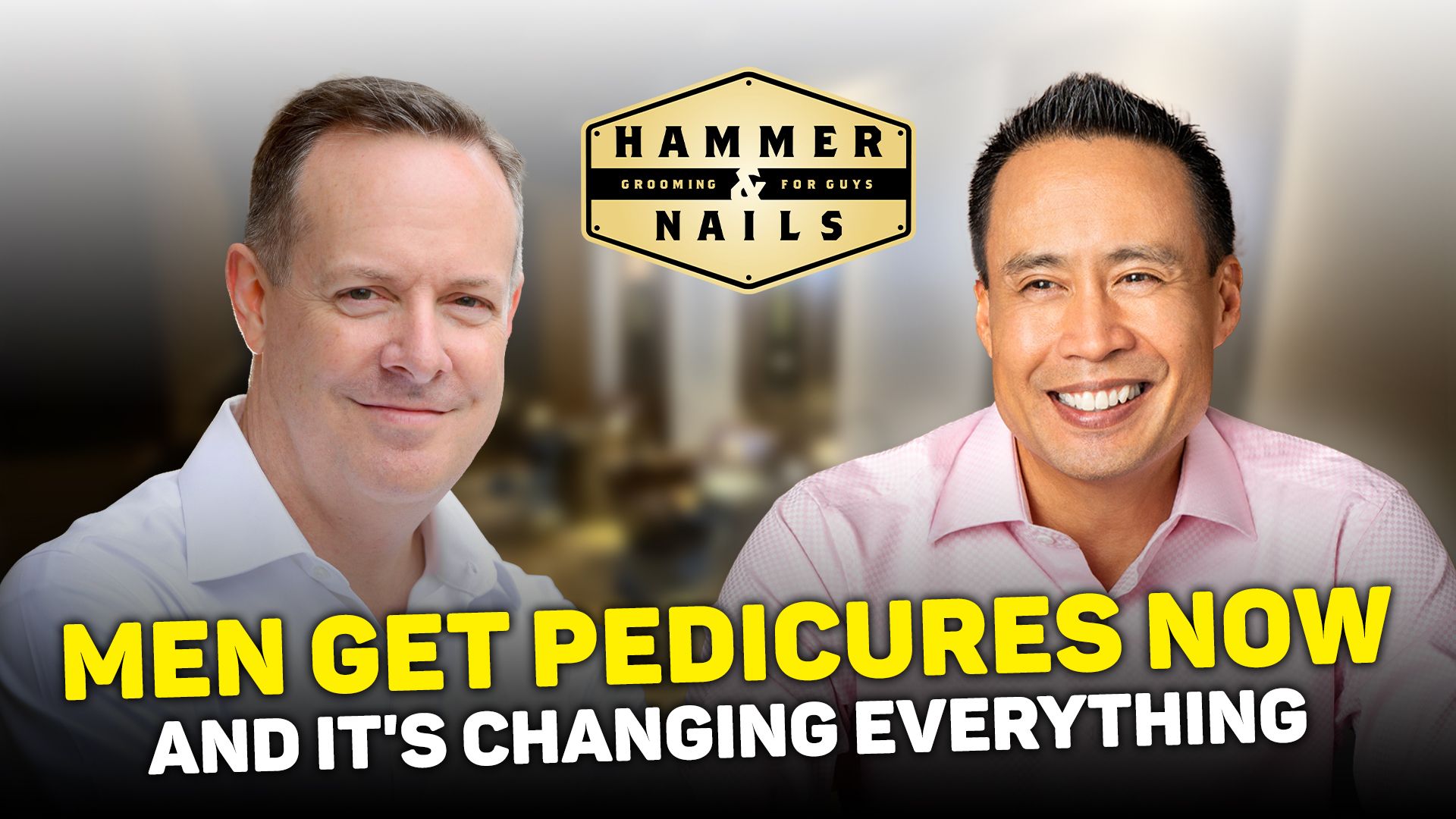
Alan: My guest today didn't just buy one men's grooming franchise and call it a day. He came in with a capital markets background, built a holding company structure around it, and is on his way to owning 20 locations of the fastest-growing luxury men's grooming franchise in the US. He's the CEO of Hammer & Nails Texas, and he's just getting started. Frank Mueller, welcome to the Franchise Champion Show.
Frank: Alan, it is terrific to be here. I really appreciate the invitation. Our previous conversations were delightful, so I'm sure today will be the same.
Alan: I'm super excited, Frank. I was just at one of your facilities in Dallas last week. I'm excited to learn more myself and help others across the country learn as well. Let's take it back to the beginning. How did you get to where you are today?
Frank: By way of background, I am not a career franchisee. I'm a capital markets guy — private equity, investment management. That's been my entire career.
During that time, I had the opportunity to work with a lot of really smart investors, and I learned a lot about what creates an uneven coin flip — things you look for. If you can get a coin flip to 51/49, you will bet an infinite amount of money, because you can win that uneven coin flip. There are certain factors you can identify in investment strategies that help increase those odds.
I've been a student of data, and one of the areas I look at is changes in discretionary spending. As human beings, we're fairly stable in what we tend to buy as a percentage of our discretionary income — until we're not.
About a decade ago, men — particularly younger men — began to change. At first it was just a one standard deviation move, and that got my attention. But I require more evidence. Maybe seven or eight years ago, it moved to a two standard deviation event — 99.6%. And now we're at a three standard deviation move.
In the world of statistics, there's a huge difference between fads and trends. Fads come and go. People love to hop on a fad — that's what we call traders in Wall Street parlance. They love volatility. That has nothing to do with fundamentals. I'm not a trader, I'm an investor. I like trends.
So what was this trend? Men began to prefer health, wellness, appearance, and other forms of experiences — going out to dinner, traveling, those types of things. And it skewed younger.
One of the areas where this expressed itself was appearance. So the second factor I look for: are there competitors? Because ideally, you don't want competitors. And there was no luxury national men's grooming business. None. Regional players, but zero national.
I like that, because first to national wins. Take Massage Envy. Twenty or thirty years ago, someone said, "We're going to create a national massage business." First thing you would have said is, "Is that even legal?" But they correctly identified a shift in how women defined wellness — massage therapy was becoming part of it. Now there's a Massage Envy on every corner. I want to be part of that ramp-up.
That's the second factor. Third factor: youth.
Look, I'm not a spring chicken anymore. The number of haircuts I have remaining — with the limited amount of hair I still have on my head — has a certain net present value. I can calculate maybe 20 more years of haircuts. You've got 40. The economic valuation is more than double. From a capital markets perspective, you love it when guys establish spending patterns during a generational shift, because the NPV of that is incredibly valuable.
When was this trend last manifested? Go back to 1870 to the 1920s. Look at a picture of a guy in 1890 in New York City — big beard, masculine world. Fraternal organizations, social clubs, barbershops. These were places where men gathered and asserted their masculinity.
But masculinity comes with pros and cons, and there's always a counter trend. The suffrage movement really began in the 1870s and 1880s. By the 1920s, women had assumed more control over the economic decisions of men — and you saw the beards go away. Women wanted a more sensitive man.
Now look at what's happening. Even in cinema surveys, women are looking for masculinity again and finding beards more attractive. Once this trend is established, it tends to last 50 to 70 years. It's generational. Once you establish spending patterns in your early adult years, you'll persist with that for life.
Last factor: not all locations are equal.
When I look at states across the US, certain states drive the economic success of franchise laws. Texas is number one — but there's also Florida, North Carolina, California, and others. About seven to ten states have really strong franchise economies. The real economic juice, the productivity per shop, is usually related to where there's a heavy concentration of the types of people who buy your product. Texas skews younger. That's great.
And then the final factor — I promised I'd shut up — diversity. You don't want a product or service that appeals to only one ethnicity or demographic. You want it to cut across all of them, driven by something deeper than exterior factors. It's a desire within someone to be the best version of themselves.
That's really what's going on. All of those shifts — fitness, travel, dining, grooming, appearance, wellness — are about a feeling. About creating an experience. Life is no longer about your car or your home, which is why you see spending decrease in those categories and increase in these others.
So when you put all of that together — why Hammer & Nails?
It had reached a point in its development where it became certain. 99% of franchise brands don't make it to 100 locations — that's the cold, hard truth. But data shows that once you see a franchise with 20 to 40 open shops, you know they're going to make it. Hammer & Nails had that data. We'll be over 100 shops open this year and on track for 500 in the next two to three years.
And one more thing — Hammer & Nails was originally a Shark Tank deal. The founder correctly identified the trends but didn't have the operational expertise to scale the business.
Here's what's going to blow people away: haircuts are a saturated marketplace. Guys maybe want a better haircut — that's true. But the real growth is in cosmetology. Fingers, toes, and facials.
Twenty years ago, 2% of males across the planet got pedicures and manicures. Today it's 10%. By the end of this decade, it'll be 20%. In 20 years, it'll be between 60 and 80%. It is the fastest-growing segment in the appearance category — not just in the United States, around the world.
Think about it. How many nail salons do you see dedicated to men? Zero. No competition.
So when we go up against barbershops, it's not even a fair comparison — because we're full male grooming. Facials, fingers, toes, coloring, cuts, shaves. Everything. There is no competitor. No one dedicates the kind of physical space that we do to Hammer & Nails.
For those interested in owning one or multiple shops, this is an uneven coin flip. If you believe the factors I've outlined, that's why this is so compelling.
Alan: Wow. That was a ton of great information — my head is spinning. Let's start with where we ended up: manicures, pedicures. I think for a lot of people, that's going to be a surprising "wait, what?" moment. You talked about masculinity and beards coming back — those two things don't seem like they go together. Start us off there.
Frank: It's on multiple fronts. Let me start with one that's a little lighthearted, but it's true.
Women don't like men's toenails. Let's be honest. There are a lot of women out there at night going, "Keep those nasty things away from me." And a lot of men don't like that feedback either. It's just not great.
In today's world, we're not covering our feet all the time like they were in the 19th century. Appearance matters. There's an aesthetic being driven by what women find desirable — maybe not just facial hair, but cleanliness, orderliness, and the overall appearance of men. And men respond to the buying decisions of women.
Think about it — right now there are guys going to female nail salons with their wives or girlfriends, sitting there uncomfortably. It's weird. It doesn't fit. They're a fish out of water. That's Marketing 101.
The second thing that's really interesting — and women have picked up on this — is health.
When you walk into a hospital, the first thing a doctor or nurse does is lift up the sheet and look at the toes. Indicators of disease — infections in the mouth, cavities, gingivitis — show up there. Same with the toes. They're two of the central mechanisms health professionals look at for a quick read on blood flow and infection in the body.
Women have also picked up on something else: the traditional pedicure experience — sitting in a whirlpool machine that's supposed to be completely cleaned after every use — is a health risk. During COVID, people started to realize that sticking your feet into that water when you have even a small nick can be a pipeline to disease.
What we do at Hammer & Nails is take a health-forward approach. We use a podiatrist-approved, plastic-lined bucket with distilled water. Our instruments are treated just like they are at a dentist's office. The first thing our artists do is examine the feet for signs of diabetes and hypertension. We've had clients come back and say, "Thank goodness you told me something was wrong."
So it's more than appearance. There's a genuine awareness growing — particularly among women — that nail care needs to be done cleanly, without harsh chemicals. Walk into many nail salons and you're hit with petrochemicals. Walk into our shops and there's none of that. All-natural, organic products. Completely clean.
Interestingly, in our Texas shops, five to fifteen percent of the people who come in are women — brought in by their husbands or boyfriends who wanted to check it out. And here's what's fascinating: men are highly uncomfortable in locations geared for women. But women? They're very comfortable in spaces geared for men. It's relaxed. People laugh. There's no drama — it's just people hanging out, being themselves.
We have a separate nails room. Lights come down. Music at the right level. Carefully selected channel. It's a place where people can simply relax and be with others who are working to be the best version of themselves.
It embraces health, wellness, and appearance — and it does so in a way where the experience is what's prioritized, not just the service.
Alan: Yeah. When I visited your Dallas location, I knew immediately — this is not a typical barbershop. It's not a salon. There were multiple areas that really stood out. Take us through the experience. The first thing I saw when I walked in was a bar on the left. What's going on there?
Frank: That's intentional. When you go to create a men's grooming shop — not a men's barbershop, but a place for men's services, a place to gather and be — you have to disrupt the perception of what a barbershop is.
So when you walk into our shop, the first thing you're hit with is, "Oh my gosh, this is Cheers." We do that by design. It directs the eye and sets the tone. The first interaction we have with a new guest is about scope: we're a private members' club — for men who prioritize grooming, appearance, and wellness. There's no sales pitch. It's simply, "Wait a second — private club? There's a bar? This is my place."
We walk them over to the membership tiers — three options — and explain what's included. But the first thing we do when we get you in the chair is learn about you. What do you want to look like? How do you aspire? How often do you currently get groomed? Why are you here? We do what we call a needs-based analysis from a grooming perspective.
And here's something important: at most grooming salons — male or female — they talk to you through the mirror. Think about that. In many ways, it's almost dehumanizing. We angle the chair out toward the guest. They come in, sit down, and we talk one on one. We take notes. Over time, our artists earn the right to say, "Have you ever thought about trying this?" Because they understand what makes a man look good — and they've earned that trust.
The membership is introduced throughout the service — not as a sales pitch, but naturally. "To maintain this look, you need to be in here every two weeks. I know you've never had a pedicure before — the first one's on us. That means three services a month, which is our VIP membership. And here's the benefit: if you like me as your artist, Wednesdays at 2 PM are yours. We book members in advance."
Men like routine. We're kind of simple creatures. When you find someone you trust, you want to keep going back. And when the artist treats you the way you want to be treated — not the way they feel like working — that's when you build a real relationship.
We have a saying inside our shops: we don't make our problems theirs. We don't talk about ourselves. We talk about them. We take an interest in their wives, their kids, where they're traveling. When you go outside of yourself within your chosen vocation, you create something powerful. The guy sitting in the chair is thinking: I'm seen. I'm heard. They know me — not just my name, but my clipper size, how often I come in, what color I like on my beard.
This kind of personalization doesn't exist in the men's grooming industry. And when you walk into any Hammer & Nails location in the US, your membership is good everywhere — and your notes travel with you.
Now, the other thing we know about guys: fear of commitment. The big C-word. So our membership has no contract, no commitment. Quit anytime. The credits you build up don't go to waste — you can give them to a friend. We're not like the fitness industry, signing people up and hoping they never show up. We sign people up, book them in advance, and build stable relationships.
So when a guy looks around and goes, "My favorite drink. My favorite artist. My favorite time slot. My favorite haircut. And no contract — with 20% savings?" There's nothing missing. It's a checkmate move in the marketplace.
Alan: That sounds like a formula for success. What about diversification — and what happens when an artist leaves?
Frank: Great question. The number one reason guys leave a barbershop is because their barber leaves — and the only service that barbershop offered was a haircut.
We intentionally design relationship diversification and service diversification. Your best friend in the shop is the general manager, whose primary job is to be close with every member. When you walk out, I want that manager coming over to you asking, "Anything you'd like to share?" — because sometimes it's hard to say something in the moment. We've earned the right to hear the truth.
You also have a membership concierge who knows your drink, your preferences, your schedule. You have a cut-and-shave artist who knows exactly what you want. And you have a separate hand-and-foot artist.
Think about it: if you're a guy getting a manicure, a pedicure, and a haircut every month — with your favorite drink waiting — and one artist leaves... where are you going to go? Back to your wife's nail salon? Back to a barbershop with none of this? No.
Flash forward: you've got 1,000 to 1,500 members and a waiting list. A guy starts thinking, "Do I really want to quit? I'll lose my spot." That's the scarcity effect. And it also drives the development of your next shop — because you know where your members live, their zip codes. One shop leads to the next.
It's built on a recurring revenue model. You wake up each month knowing what's coming in. That's not just great for business — it creates real stability.
Alan: You nailed it. The experience is the product. It's not the haircut.
Frank: Exactly. A haircut's a haircut. A cheeseburger's a cheeseburger. Here's one of my favorite analogies: Chick-fil-A. It's just a chicken sandwich. How were they going to compete against McDonald's and Burger King? They decided to treat their people better. Pay a better wage. Invest in training. Give benefits.
When you walk into a Chick-fil-A, you can feel it. Cleaner. Friendlier. Happier.
Our business is much the same. Most barbers and cosmetologists are not treated well — it's one of the worst-treated vocations in America. We break that model. We give our artists a dignified hourly wage — well above minimum wage. We put well-to-do clients in their chairs, which means better tips. And we give them the time to do their job right: minimum 30-minute turns, sometimes 45 minutes or an hour, depending on the service.
You chose barbering and cosmetology because you're an artist. You enjoy it. We respect that. We respect the nobility of that vocation — because to get to the experience, it starts with the person providing it.
And that history goes back over 3,000 years. In ancient Greece and Rome, barbers were considered artists. The Latin word for their craft is essentially the root of our modern word "artist." That's the esteem the profession once held. We're making an attempt to return that nobility — because these are people who society often overlooks, and they deserve better.
If you win the labor battle over the long haul, you win the war.
Frank: Let me talk about what we call the "failing forward" culture — because this is an area we're still working to get right.
In my business life, I love it when people come to me and admit a problem before I catch it. If I constantly have to chase people down, it's no fun for anyone. But if someone walks up and says, "Hey, I didn't do this as well as I should have" — before anyone else would have noticed? Give them a bonus. Reward the transparency.
We're building a culture where people run toward problems, not away from them. Don't duck, don't hide. Run to it.
When we win that cultural fight — when people understand that I want them to fail forward — that's when something powerful happens. As an athlete, you know: you didn't get good by winning every time. You got good because you failed 10,000 times.
Most people need to be rewarded for failure — with positive incentives — because it doesn't come naturally. It's hard. It's weird. And for barbers and cosmetologists who've been treated poorly for years, there's often some damage to work through. When we get it right, we're doing radically important things — not just economically, but for people. They learn that success comes from failing forward. Every loss is just another lesson.
Don't ever view it as a loss. You just learned something today. Get up and grow.
Alan: I love that. Win or learn. Frank, let's segue — you're the CEO of Hammer & Nails Texas, which is a pretty unusual title. Tell us about how you're set up and what an area developer actually is.
Frank: I'm going to put the Wall Street hat back on. Stop me if I lose you.
In almost any retail business, operations is the indispensable element. You have to be a great operator. So we built an operations company — with a strong head of operations, great general managers, and an infrastructure we can apply not just to Hammer & Nails but to other non-competing brands in the future.
The second leg of the stool is franchisee development. A lot of area developers own maybe one or two shops. I believe I'm currently the largest Hammer & Nails franchisee anywhere. We're growing. And if you're going to partner with an area developer, wouldn't you want someone who has serious skin in the game? Who owns and operates multiple shops, is right there beside you, and has already learned the hard lessons so you don't have to?
We've also built relationships with general contractors, landlords, and vendors — giving our franchisees better pricing and contracts than they'd get on their own. That's what I call alignment — instead of conflicts of interest, you seek alignment.
I'm not just an EBITDA guy — I share in your drive for profits. It's not just about selling licenses. It's about creating economic success through great operations.
The third leg: investment management. When I entered the franchise world, I was struck by how many potentially great people get turned away — 24 out of 25 don't become franchisees because they don't have the money, the temperament, or the operational background. The industry just moves them to the side.
We've created a structure where someone can say, "I'm a great doctor. I should stay a doctor. But maybe I can invest with you, Frank, and help scale more shops." We minimize the spoilage. We turn those one-in-twenty-five conversations into something productive.
So the three-legged stool of Hammer & Nails Texas is: a franchisee development company, an investment management company, and an operations company — all under a holding company structure. That puts a CEO over the whole thing, and it lets us apply this model across multiple concepts over time.
Alan: That's really different from working directly with the franchisor. As an area developer, you bring local support, real-world know-how, and relationships that individual franchisees couldn't access on their own. What does Texas look like for you as a market?
Frank: You can probably tell from the accent — I'm from here.
Nobody comes to Texas for the weather. But because of that, the state has to compensate. It's called the friendly state for a reason.
Texas is also uniquely positioned geographically — it's effectively the capital of South American and Latin American trade with Houston's port, has the largest hydrocarbon concentration outside Saudi Arabia, one of the largest agricultural bases, and is rapidly becoming the financial capital of the country. Goldman Sachs, JP Morgan, and others are moving operations here. Ten thousand JP Morgan executives relocated from New York City. Another fifteen thousand from Goldman.
Texas has also been the leading state for business in the US for 20 consecutive years. There's a stat that suggests if Texas were removed from the US, the country would be in recession. That's how significant the economic output is.
And because Texas has no state income tax, people have more disposable income. It's not about what you make — it's about what you keep. Texas ranks near the top in per-capita disposable income.
The growth isn't just in Houston, Austin, and Dallas. It's in Midland, Lubbock, El Paso, San Antonio, Tyler, Amarillo, Beaumont. The state is diverse by industry too — Austin for tech, Houston for Fortune 500 and healthcare, Dallas for finance, and so on. That diversification is a natural hedge. When one sector zigs, another zags.
I'm contractually obligated to develop a minimum of 60 shops in Texas. But the state can hold more than 100. And I'll say this — we're seriously looking at secondary markets. Tyler, Texas. Huge growth, zero competition. We could absolutely kill it there.
Most franchise concepts stay in primary markets. When you move to secondary and tertiary markets in Texas, you can find real opportunity with far less competition. That's a significant advantage.
Alan: So what does the ideal Hammer & Nails candidate look like?
Frank: Three things.
First, they want to own an experience business — not a barbershop. That's not an insignificant distinction. It's the experience that has the value. The light bulb has to go on for that.
Second, they have to be committed to developing a culture where their artists are financially rewarded and feel valued — but also accept the responsibility that it's not about them. It's about the member and the guest. You need a leader who says that hard thing every day — plainly and clearly.
Third, a multi-unit mentality. Think bigger. The underlying risk in my opinion is a single unit — it's like putting everything on 28 red at the casino. When you get to a third unit, you've meaningfully reduced your portfolio risk. We do the research on employment factors, demographics, and location strategy. Don't just pick a spot because it's close to your house. Go deeper than that.
If those three things resonate with someone listening to this — we want to talk to them.
Alan: That was an incredible conversation, Frank. I love how you spoke to the brand, the experience, the culture — and even the case for Texas as a franchise market. I learned a lot. Congratulations on being a Franchise Champion.
Frank: Thank you, Alan. I appreciate everything you're doing in the marketplace. The lessons of the athlete-to-owner journey are powerful. People should hear your story. I'm grateful we got the chance to connect. God bless what you're doing.
Alan: Thanks, Frank. We'll have to catch up again for a status update.
Don't miss a beat!
We hate SPAM. We will never sell your information, for any reason.